Gypsum board is one of the most common materials in UAE fit-outs. It is used for ceilings, internal partitions and wall linings in villas, offices, shops and apartments. Choosing the wrong type for a room is a common and expensive mistake: a standard board in a bathroom can swell and crumble, and a standard board where fire rating is required can fail an inspection.
Key takeaways
- Gypsum board is one of the most common materials in UAE fit-outs.
- Standard gypsum board is the everyday board for dry interior areas such as living rooms, bedrooms, corridors and offices.
- Standard board is not suited to bathrooms or kitchens, where it will swell.
- If a room has a fire rating on the drawings, that rating decides the board.
This guide explains the main board types, where each one belongs, and what to check before you order. For the full range we stock, see our gypsum boards page for Dubai, Sharjah and Ajman.
The main types of gypsum board
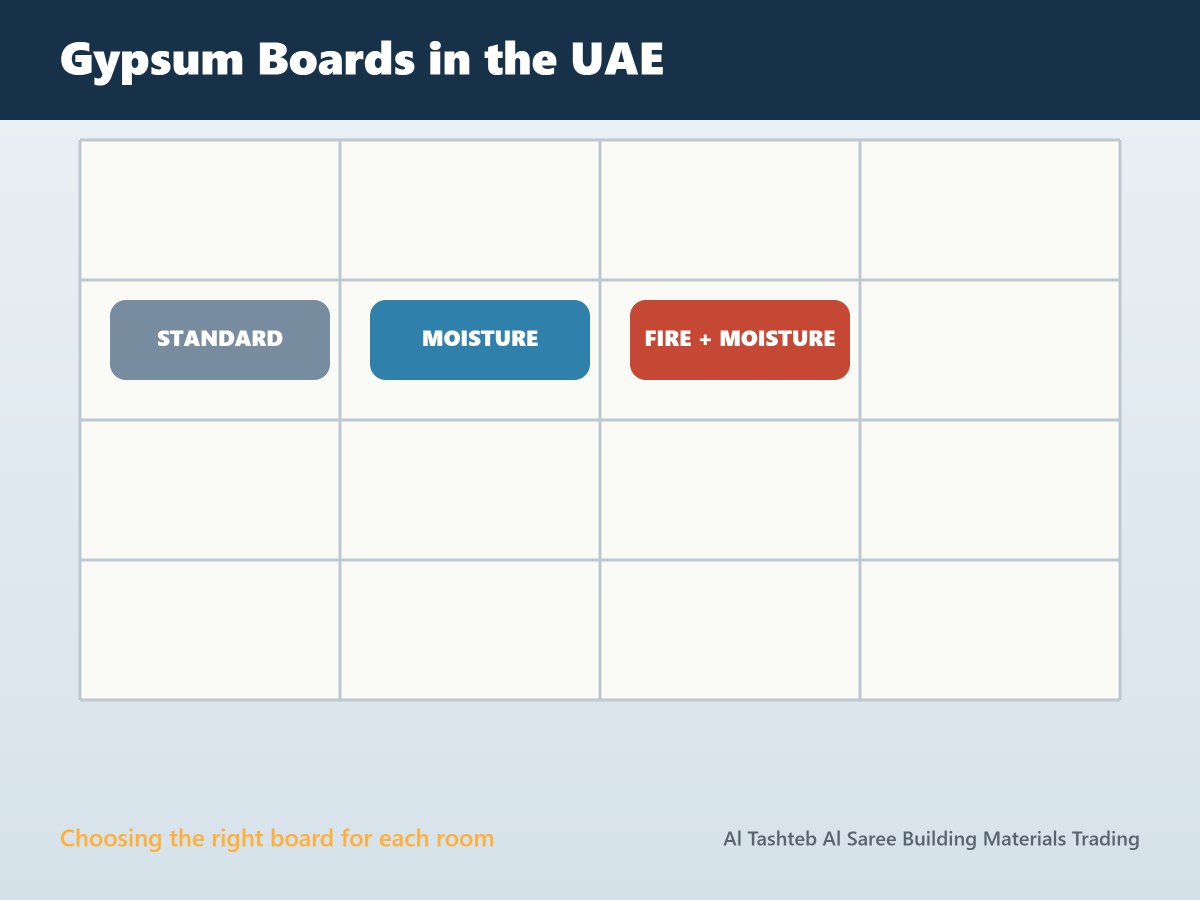
- Standard gypsum board: the everyday board for dry interior areas such as living rooms, bedrooms, corridors and offices. It is the most economical option when moisture and fire are not special concerns.
- Moisture-resistant board: has a treated core and facing for areas with humidity, such as bathrooms, kitchens and laundry rooms. It resists moisture better than standard board, but it is not waterproof, so tiled areas still need proper waterproofing.
- Fire-resistant board: has a core that holds up better in a fire, usually specified by thickness and fire-test rating. It is used where building regulations or the design call for fire protection, such as corridors, stairwells and separation walls.
- Fire and moisture-resistant board: combines both properties. Use it where a room needs both fire protection and humidity resistance, for example some service areas and plant rooms. Knauf, for example, sells fire and moisture-resistant boards in the UAE.
Which board for which room
As a general guide, not a specification:
- Living rooms, bedrooms and offices: standard board.
- Bathrooms, kitchens and laundry rooms: moisture-resistant board, with tiling and waterproofing on top.
- Corridors, stairwells and fire-separation walls: fire-resistant board, specified by the rating in your drawings.
- Areas that need both protection from fire and humidity: fire and moisture-resistant board.
If a room in your project has a fire rating on the drawings, that rating decides the board. Do not substitute a moisture-resistant board for a fire-rated one, or the other way round, without the consultant’s approval.
Thickness and framing
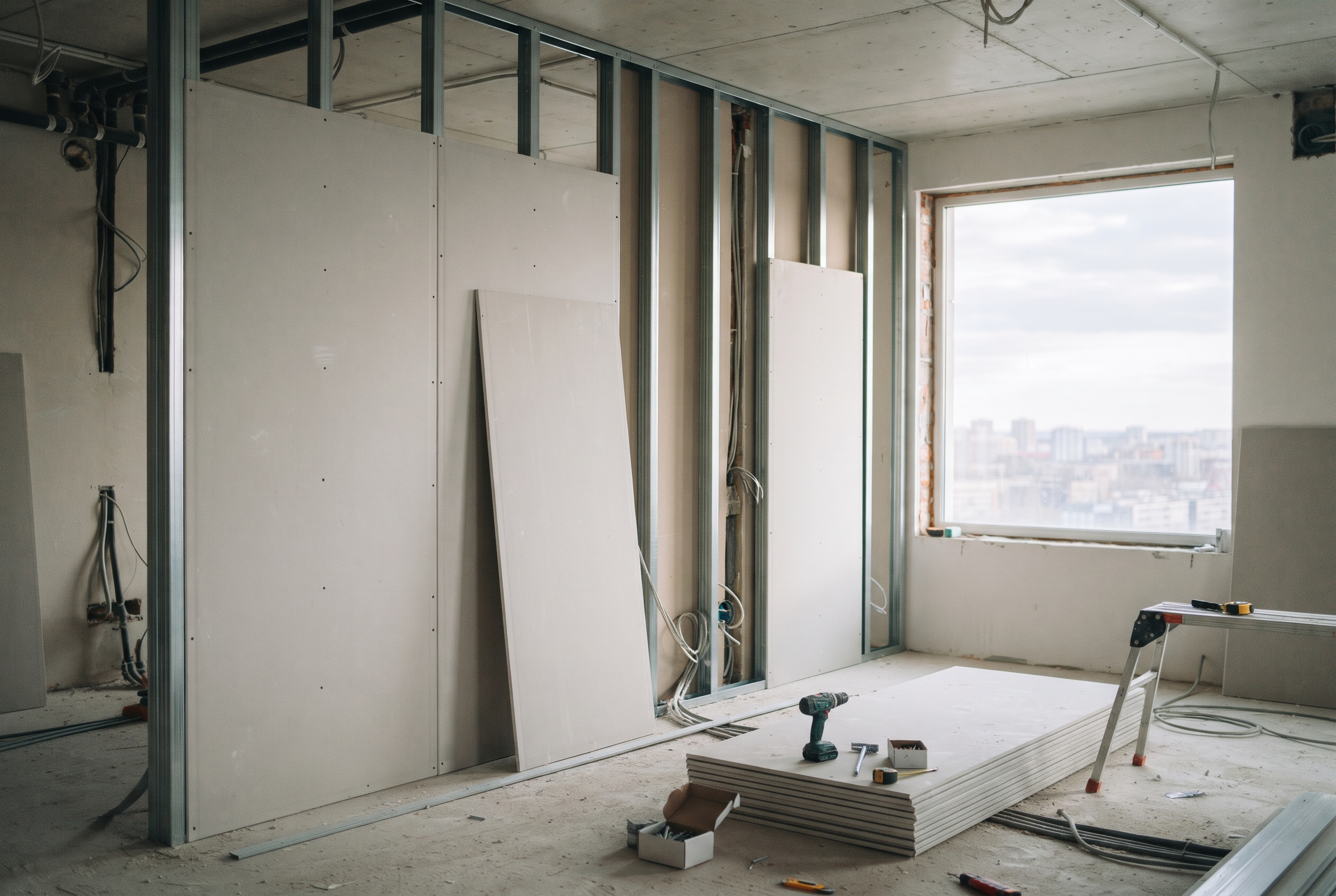
Board thickness is usually given in millimetres, and the common sizes in UAE projects include 9.5 mm, 12.5 mm and 15 mm. Thicker board is stiffer and gives better fire and sound performance, but it is heavier and needs closer framing. The framing spacing and the fixing pattern must follow the manufacturer’s installation guide for the board you choose. Check the datasheet for the rated span and the maximum spacing of the studs and channels.
What to check before you order
- The room schedule or drawings: confirm which walls and ceilings need fire-rated or moisture-resistant board.
- The manufacturer’s datasheet: check the board type, thickness, fire rating and the framing spacing. Ask the supplier for the datasheet rather than relying on a product name.
- The quantity: add a wastage allowance for cutting and offcuts, then check the number of boards against the wall and ceiling areas.
- Joint and finishing materials: use the jointing compound and tape recommended for that board, with the right screws for the thickness.
- Storage on site: keep boards flat, dry and off the ground. Boards that get wet on site can warp or lose strength before fixing.
Common mistakes
- Using standard board in bathrooms or kitchens, where it will swell and fail.
- Assuming “moisture-resistant” means waterproof. Tiled wet areas still need waterproofing membranes and proper falls.
- Ordering by thickness alone and ignoring the fire rating.
- Fixing boards too far apart, which causes sagging and cracking at the joints.
- Leaving boards exposed to rain or damp on site before they are covered.
Frequently asked questions
Can gypsum board be used outside?
Standard gypsum board is intended for interior use. For exterior walls, use a board or system rated for exterior exposure, and follow the manufacturer’s guidance on sealing and finishing.
Is moisture-resistant board the same as fire-resistant board?
No. Moisture-resistant board is designed to handle humidity. Fire-resistant board is designed to slow the spread of fire through a wall or ceiling. Some boards combine both, so read the datasheet.
Where can I buy gypsum boards in Sharjah and Dubai?
Al Tashteb Al Saree Building Materials Trading supplies gypsum boards for contractors and homeowners in Sharjah, Dubai and Ajman. Contact us with your board types, thicknesses and quantities for a quotation.
Need help choosing the right board?
Send us the room list or drawing and we will help you match the board to each area. Request a quote or browse our products.