Short answer: Acrylic Rock Top Coat is the simple one: a one-pack, quick-drying acrylic in gloss or matt, applied in two coats over Nutex texture. Nationalthane and Polyurethane Topcoat are two-pack polyurethanes mixed 4 parts base to 1 part hardener by volume; they give a tougher, glossier film but come with a pot life, a longer recoat time and a 7-day cure. They are separate products with separate data sheets, so follow the system on the sheet of the one you choose. Here is how to decide between a PU topcoat and an acrylic one.
The three topcoats side by side
| Acrylic Rock Top Coat | Nationalthane | Polyurethane Topcoat | |
|---|---|---|---|
| Type | One-pack acrylic, quick drying | Two-pack PU, high gloss, colour-retentive | Two-pack PU |
| Finish | Gloss or matt | High gloss | Gloss PU (limited colour range) |
| Mix ratio | None | 4 base : 1 hardener by volume | 4 base : 1 hardener by volume |
| Pot life | Not applicable | 8 hours at 30°C | 6 hours |
| Volume solids | Gloss 33 ± 2%; matt 46 ± 2% | Two values on the sheet, not matched to versions | 52% |
| Coverage (m²/L) | Gloss 8–11; matt 11.5–15 | 9–12 | 13 |
| Dry film per coat | 30–40 µ | 30–40 µ | 40 µ |
| Touch dry | 30 minutes | 2–3 hours | 2–3 hours |
| Recoat | 3–4 hours | At least 12 hours | At least 10 hours |
| Full cure | Hard dry 24 hours | 7 days | 7 days |
| Thinner | Acrylic Thinner, 5–15% | PU Thinner, 5–15% | PU Thinner, 5–15% |
| Application | Roller or spray | Brush, roller or spray | Airless spray 2200 psi; see sheet |
| Flash point | 32°C | Not in our source | Not in our source |
| Shelf life | 18 months | 18 months | 18 months at 25°C |
| Data sheet | Sec-f-4 | Sec-f-5 | Sec-f-6 |
The system each sheet lists
| Coat | Acrylic Rock | Nationalthane | Polyurethane Topcoat |
|---|---|---|---|
| Primer | PVA Primer White, Tex Primer or Acrylic Primer (W.B.) | PVA Primer White, Tex Primer or Acrylic Primer (W.B.) | Guard Primer for Cement |
| Middle coat | Nutex spray texture × 1 | Nutex spray texture × 1 | Interguard H.B. |
| Topcoat | Acrylic Rock × 2 | Nationalthane × 2, at least 12 h apart | PU Topcoat × 2, 40 µ each |
Guard Primer for Cement and Interguard H.B. are epoxy-system products that we do not cover in a separate guide yet. Ask us if you want the PU Topcoat system priced.
Choosing between them
- You want the simplest, quickest job: Acrylic Rock. No mixing, 30 minutes to touch dry, a second coat in 3 to 4 hours.
- You need a scrubbable high-gloss finish on walls, steel, GRP or wood: Nationalthane, which National lists for its Tile and Wall Rock systems.
- You are following the Guard Primer / Interguard epoxy system: Polyurethane Topcoat.
Gloss or matt Acrylic Rock: both build the same 30 to 40 microns dry per coat, but matt has far more solids (46% against 33%), so it covers more wall per litre.
How much topcoat to buy
| Wall area, 2 coats | Acrylic Rock gloss (8–11) | Acrylic Rock matt (11.5–15) | Nationalthane (9–12), mixed | PU Topcoat (13), mixed |
|---|---|---|---|---|
| 50 m² | 9–12.5 L | 6.7–8.7 L | 8.3–11 L | about 7.7 L |
| 150 m² | 27–37.5 L | 20–26 L | 25–33 L | about 23 L |
| 400 m² | 73–100 L | 53–70 L | 67–89 L | about 62 L |
Preparation and texture underneath
- Pressure-wash exteriors at 2200 psi minimum and let them dry, as National’s surface guide sets out.
- Remove laitance and efflorescence; repair cracks with Joint Filler.
- Let the texture dry fully: Nutex and Texo need at least 24 hours before topcoating.
- Texture options under these topcoats include Nutex (1.3–2.6 m²/L) and Super Finetex, whose own sheet lists Acrylic Rock as an optional topcoat. See also our textures comparison.
Mistakes to avoid
- Guessing the 4:1 ratio on the PU products: measure by volume, and mix only what you can apply within the pot life (8 hours for Nationalthane, 6 for PU Topcoat).
- Thinning PU with anything but PU Thinner, or Acrylic Rock with anything but Acrylic Thinner. See which thinner to use.
- Recoating Nationalthane before 12 hours or PU Topcoat before 10.
- Putting a PU surface into service before the 7-day cure.
- Applying one coat only: all three systems list two.
Send us the wall type, area and finish you want and we will recommend the right system. Message us on WhatsApp. Al Tashteb Al Saree is an authorised National Paints retailer in Bu-Tina, Sharjah.
Applying a two-pack topcoat step by step
Nationalthane and Polyurethane Topcoat are two-pack products: a base and a hardener that react to form the film. That reaction is what makes them tough, and it is also why they punish shortcuts. Acrylic Rock is one-pack and far more forgiving, but the same preparation rules apply.
- Check the texture is fully cured. A topcoat sealed over texture that is still holding water can blister or stay soft. Follow the recoat time on the texture’s data sheet, and allow longer in humid coastal weather.
- Brush down the surface. Remove dust, sand and loose grains, especially on north-facing walls where dust settles overnight.
- Mix whole kits. Pour all the hardener into all the base at the ratio on the data sheet. Splitting kits by eye is the most common reason a two-pack coating cures soft or patchy.
- Mix mechanically with a paddle at slow speed until the colour and consistency are uniform, scraping the sides and bottom.
- Respect the pot life. Once mixed, the material starts to cure in the can. In UAE heat the usable time shortens, so mix only what the team can apply in that window.
- Thin only with the specified thinner and only within the limit printed on the data sheet.
- Apply in the cooler hours and follow the sun around the building, never painting a wall in full midday sun.
- Keep a wet edge. Work in panels from corner to corner or joint to joint, so lap marks fall at natural breaks.
Questions we are often asked
Does a textured wall always need a topcoat?
Not always, but a topcoat gives the colour, sheen and protection against dirt pick-up and weather. Many specifications call for one; check the system on the texture’s data sheet.
Can I apply a topcoat over an old textured wall?
Usually yes, if the old texture is sound. Wash off chalk and dirt, repair cracks and loose areas, let it dry fully, and prime where the data sheet asks for it before the topcoat.
Why does my topcoat look patchy?
The usual causes are uneven absorption from an unprimed or partly damp texture, lap marks from painting in hot sun, or a two-pack mix that was not stirred well. A second coat over a properly prepared surface normally evens it out.
Sources
- National Acrylic Rock Top Coat data sheet, Sec-f-4 (PDF)
- Nationalthane data sheet, Sec-f-5 (PDF)
- National Polyurethane Topcoat data sheet, Sec-f-6 (PDF)
- National Paints systems specifier, Sec-a-6 (PDF)
- National Paints surface preparation guide, Sec-a-2 (PDF)
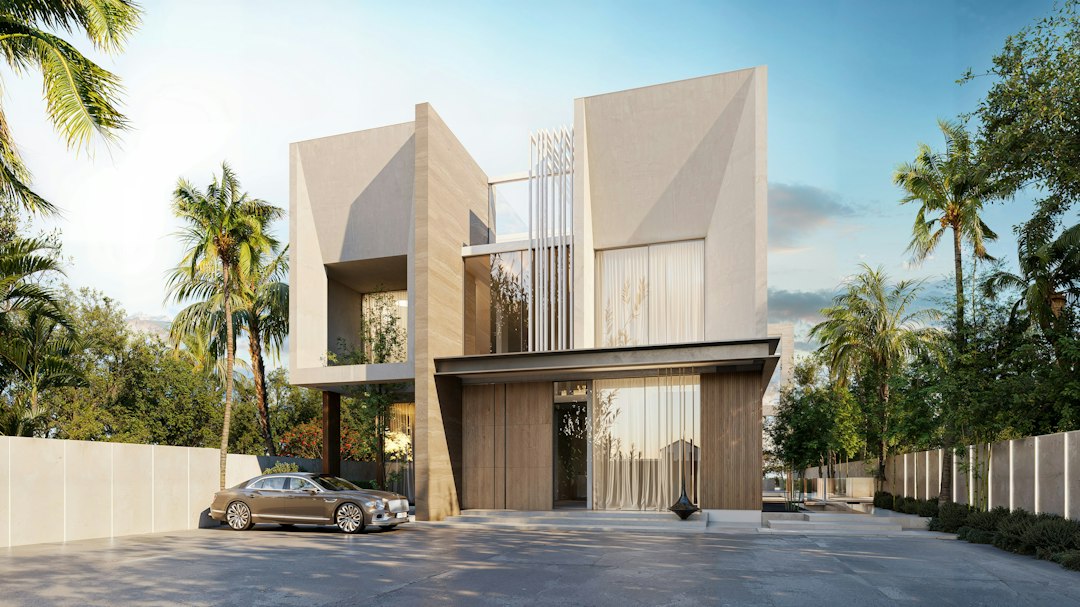
Via AEC Online, retrieved November 2026. Quantities are our own calculations. The image is an illustrative 3D render.