Short answer: on new cement plaster or concrete, use a water-based primer that National Paints lists for that wall and finish. National’s surface guide notes that fresh concrete can reach pH 13, so the coating system must be alkali resistant. Which of the four National wall primers you choose depends mainly on the finish going over it: PVA Primer Sealer under silky and textured finishes, PVA Primer White under rock, nutex, marbert and gloss emulsion systems, Acrylic Primer (W.B.) under Shield textures, Synplast and interior emulsions, and Tex Primer under the Tex family of textured coatings. Here is how to pick the alkali resistant primer UAE walls need.
Why alkali resistance matters on new walls
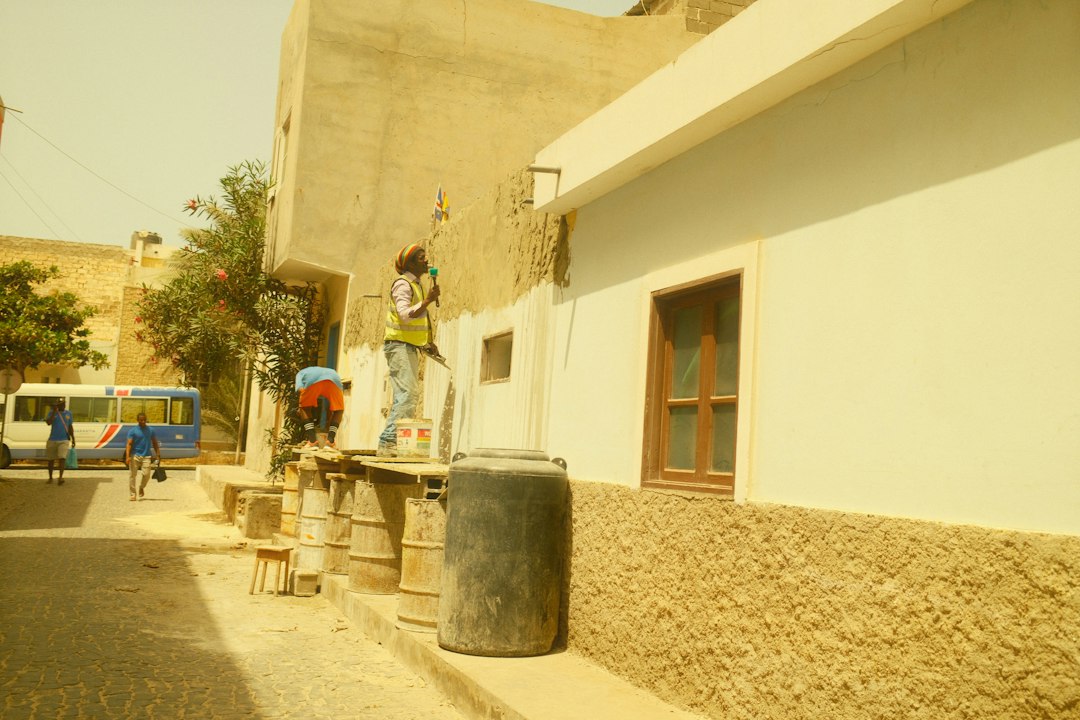
Cement plaster and concrete are strongly alkaline while they are young. A primer that is not alkali resistant can be attacked from behind, which shows up later as patchy colour, blistering or peeling. National’s surface preparation guide also asks for laitance and efflorescence to be removed before priming, and for exterior surfaces to be washed at 2200 psi minimum. The primer is only as good as the surface under it.
The four primers side by side
| PVA Primer Sealer | PVA Primer White | Acrylic Primer (W.B.) | Tex Primer | |
|---|---|---|---|---|
| Colour | Clear | White | White | White |
| Volume solids | 30 ± 2% | 35 ± 2% | 36 ± 2% | 42 ± 2% |
| Coverage (m²/L) | 10–15 | 10–11.5 | 10–12 | about 9.5 |
| Dry film | 20–30 µ | 30–35 µ | 30–35 µ | 45 µ |
| Recoat at 30°C | 2–3 h | 2–3 h | 2–3 h | 2–3 h |
| Application | Brush or roller | Brush, roller or spray | Brush, roller or spray | Brush or roller |
| Thinning | 10–15% | 10–15% | 10–15% | 15–20% |
| Data sheet | Sec-b-2 | Sec-f-1 | Sec-b-1 | Sec-c-1 |
Each of the four has an 18-month shelf life on the data sheets.
Which primer goes under which finish
| Primer | Listed in the systems specifier under |
|---|---|
| PVA Primer Sealer | Eggshell Silky, Tex and Graffio |
| PVA Primer White | Acrylic Rock, Nutex, Marbert and Gloss Emulsion |
| Acrylic Primer (W.B.) | Shield textures, Synplast and interior emulsions |
| Tex Primer | Tex, Minitex, Swiss Sandtex, Diffatex and related textured coatings |
If your finish is not in the list above, check the specifier or message us before buying. Details for each product are in our guides to PVA Primer Sealer, PVA Primer White, Acrylic Primer and Tex Primer.
How much primer to buy
Use the coverage range on the data sheet and divide your wall area by it. Coverage is a theoretical figure on a smooth surface; rough plaster absorbs more. These are our own calculations from National’s published ranges, for one coat on 100 m² of wall:
| Primer | Litres for 100 m² (best case) | Litres for 100 m² (worst case) |
|---|---|---|
| PVA Primer Sealer (10–15 m²/L) | 6.7 | 10 |
| PVA Primer White (10–11.5 m²/L) | 8.7 | 10 |
| Acrylic Primer (10–12 m²/L) | 8.3 | 10 |
| Tex Primer (about 9.5 m²/L) | about 10.5 | |
Thinning does not add solids, so a thinned primer covers more area but leaves a thinner dry film. Stay inside the thinning range on the data sheet.
Common mistakes
- Priming over laitance, dust or efflorescence instead of removing it first.
- Choosing a primer by colour or price instead of by the finish going on top.
- Recoating before the 2–3 hours listed at 30°C have passed.
- Thinning beyond the data-sheet range to stretch the tin.
Before and after priming, see also how to prepare a wall before painting, National Paints systems by surface and how much paint you need.
Not sure which primer suits your wall? Message us on WhatsApp. Al Tashteb Al Saree is an authorised National Paints retailer in Bu-Tina, Sharjah.
How to check that new plaster is ready
- Time: follow the curing time the paint manufacturer recommends for new cement plaster before painting.
- Colour: damp plaster is darker and patchy. Wait until it is evenly light in colour.
- Salts: white powdery deposits (efflorescence) mean moisture is still moving through the wall. Brush them off and wait.
- Touch: the surface should feel dry and hard, and not leave powder on your hand.
Questions we are often asked
Can I skip the alkali-resistant primer if I use a good emulsion?
On new cement plaster and concrete it’s not worth the risk. The primer is what protects the finish from alkali in the fresh wall and evens out absorption.
Do repainted walls need alkali-resistant primer?
Usually not on sound old paint. Use it on new plaster patches and repaired areas, and follow the system for the finish you’re applying.
Is one coat enough?
The systems normally call for one coat of primer. Check the data sheet for the topcoat you’re using.
Sources
- National Paints, Acrylic Primer (W.B.) data sheet, Sec-b-1
- National Paints, PVA Primer Sealer data sheet, Sec-b-2
- National Paints, PVA Primer White data sheet, Sec-f-1
- National Paints, Tex Primer data sheet, Sec-c-1
- National Paints, surface preparation guide, Sec-a-2
- National Paints, systems specifier, Sec-a-6
Via AEC Online, retrieved November 2026. Quantities are our own calculations. The image is illustrative.