A common site rejection on villa plots in Sharjah, Ajman, and Dubai happens before the ground floor slab is even poured: the mason lays substructure blockwork below DPC or casts blinding concrete using standard 50 kg OPC bags instead of SRC. The consultant inspects the delivery note, puts a hold on backfilling, and the contractor ends up hacking out mortar or paying for remedial waterproofing.
Across UAE coastal and sabkha soils, dissolved sulphates in groundwater react with ordinary cement and expand inside the concrete matrix until it cracks and spalls. Under GCC standard GSO 1914:2009 (Portland Cement) and GSO ASTM C150/C150M:2023—alongside BS EN 197-1 CEM I and BS 4027—choosing correctly between OPC vs SRC cement in the UAE comes down to ground exposure, soil chemistry, and where the element sits relative to the damp-proof course (DPC).
In This Guide
Quick Answer: OPC vs SRC Cheat Sheet for UAE Sites
- Use OPC (Ordinary Portland Cement, 42.5N / ASTM Type I): All superstructure works above DPC—columns, slabs, beams, 400×200 mm blockwork mortar above ground, internal and external plastering, floor screeds, and general non-sulphate concrete.
- Use SRC (Sulphate Resisting Cement, ASTM Type V / BS 4027): All substructure works in contact with soil or groundwater—blinding concrete, pad and strip footings, tie beams, neck columns, blockwork below DPC, retaining walls, and drainage manholes.
- Check the C3A limit: SRC restricts tricalcium aluminate (C3A) to a maximum of 5.0% under ASTM C150 Type V (and ≤ 3.5% under BS 4027), which stops expansive ettringite formation in sulphate-rich ground.
- Do not rely on SRC alone for chlorides: Low C3A resists sulphates, not coastal chlorides. In marine or high-chloride zones, pair proper concrete cover and bitumen/membrane waterproofing with consultant-approved blended mixes (GGBS or microsilica).
- Bag weight and pallet math: Both OPC and SRC are supplied in 50 kg bags across the UAE (20 bags = 1 metric tonne).
OPC vs SRC Cement: Chemical & Technical Comparison
The real difference between OPC and SRC sits inside the clinker chemistry—specifically the percentage of tricalcium aluminate (C3A). Standard OPC typically contains 7% to 11% C3A, which gives brisk early strength gain for fast-track slab cycles and plastering.
When groundwater carries dissolved sulphates (SO₄), those sulphates react with C3A in hardened cement paste to form ettringite—a crystal that expands in volume and bursts the concrete from the inside. SRC cuts C3A below 5.0% (ASTM C150 Type V) or 3.5% (BS 4027), shutting down that reaction in aggressive UAE soils.
Commercial pricing in AED (plus 5% UAE VAT) shifts with cement mill origin, clinker processing costs (SRC requires tighter raw-meal control and slightly higher kiln energy), order volume (loose bags vs full 40-bag or 30-bag pallets), and flatbed crane delivery distance across Sharjah, Ajman, and Dubai. Rather than guessing from outdated lists, send your BOQ or bag count for a same-day firm quote.
| Property / Criterion | OPC (Ordinary Portland Cement) | SRC (Sulphate Resisting Cement) |
|---|---|---|
| UAE / GCC Standards | GSO 1914 Type I, BS EN 197-1 CEM I 42.5N, ASTM C150 Type I | GSO ASTM C150 Type V, BS 4027, EN 197-1 CEM I-SR |
| C3A Content | Typically 7% – 11% (no low-C3A cap) | ≤ 5.0% (ASTM C150 Type V) / ≤ 3.5% (BS 4027) |
| Early Strength Gain | Faster 3-day and 7-day strength; quicker formwork striking | Slightly slower early strength; reaches full 28-day class (42.5 MPa) |
| Heat of Hydration | Moderate to high (needs strict summer curing) | Lower heat evolution than OPC of the same grade |
| Sulphate Resistance | Low — vulnerable in sabkha and high-SO₄ soil | High — designed for soil and groundwater sulphates |
| Chloride Resistance | Moderate (higher C3A binds some free chlorides) | Lower chloride binding — never use alone in marine splash zones |
| Primary UAE Uses | Superstructure concrete, plaster, blockwork above DPC, screeds | Blinding, footings, tie beams, blockwork below DPC, manholes |
| Standard Packaging | 50 kg bags (20 bags per tonne) | 50 kg bags (20 bags per tonne) |
UAE Coastal & Sabkha Site Warning: SRC is not a blanket upgrade over OPC. Because SRC has very low C3A, it binds fewer chloride ions than OPC. On coastal plots in Sharjah, Ajman, or Dubai where the soil investigation shows both high sulphates and high chlorides, Dubai and Sharjah consultants typically require blended ready-mix concrete (OPC + GGBS or microsilica) for structural foundations, reserving bagged SRC for blinding, substructure blockwork mortar, and drainage benching—always backed by proper waterproofing and protective coatings.

Worked UAE Calculation: 50 kg Bag Quantities for a Villa Substructure & Plastering
Separating your SRC and OPC orders accurately prevents leftover pallets sitting in humid site storage. Before placing a PO, cross-check your dimensions with our Concrete Volume Calculator, Concrete Mix Calculator, and Plaster Calculator.
Worked Example: Typical G+1 Sharjah Villa Plot (Site-Mixed Blinding, Below-DPC Blockwork & Internal Plaster)
1. Substructure Order — SRC (50 kg bags)
- 100 mm Blinding Concrete (1:3:6 nominal mix): 140 m² footprint × 0.10 m = 14.0 m³ wet volume. At 4.5 bags/m³ = 63 bags. Add 5% site wastage (3.15 bags) → 67 bags of 50 kg SRC.
- Below-DPC Solid Blockwork Mortar (400×200×200 mm blocks, 1:4 mortar): 40 m² of neck wall (~500 blocks at 12.5 blocks/m²). Mortar requires ~0.22 bags/m² = 8.8 bags. Add 10% mortar wastage → 10 bags of 50 kg SRC.
- Total SRC Order: 77 bags (3.85 tonnes) — order 80 bags (4 tonnes) if keeping a small buffer for manhole benching.
2. Superstructure Order — OPC (50 kg bags)
- Internal Cement-Sand Plastering (20 mm average thickness, 1:4 mix): 220 m² wall area. At ~0.18 bags/m² = 39.6 bags. Add 10% wastage for rebound and spatterdash → 44 bags of 50 kg OPC.
- Total OPC Order: 44 bags (2.20 tonnes).
Tip: Always add 5% UAE VAT to your material subtotal—use our UAE VAT Calculator when preparing contractor LPOs and cash-flow sheets.
5 Common Mistakes on UAE Sites (And How to Avoid Them)
- Mixing OPC and SRC bags on the same pallet or pour: Labourers frequently grab the nearest open bag when a mixer runs short. Keep OPC and SRC stacked on separate timber pallets with clear Arabic/English signage, and verify the bag colour coding and printed standard (CEM I vs Type V / BS 4027) before opening.
- Using SRC for superstructure plastering and blockwork above DPC: Some villa owners assume SRC is “stronger” and order it for the whole house. Above ground, SRC offers no structural advantage, gains early strength slightly slower, and adds unnecessary AED per bag to the bill.
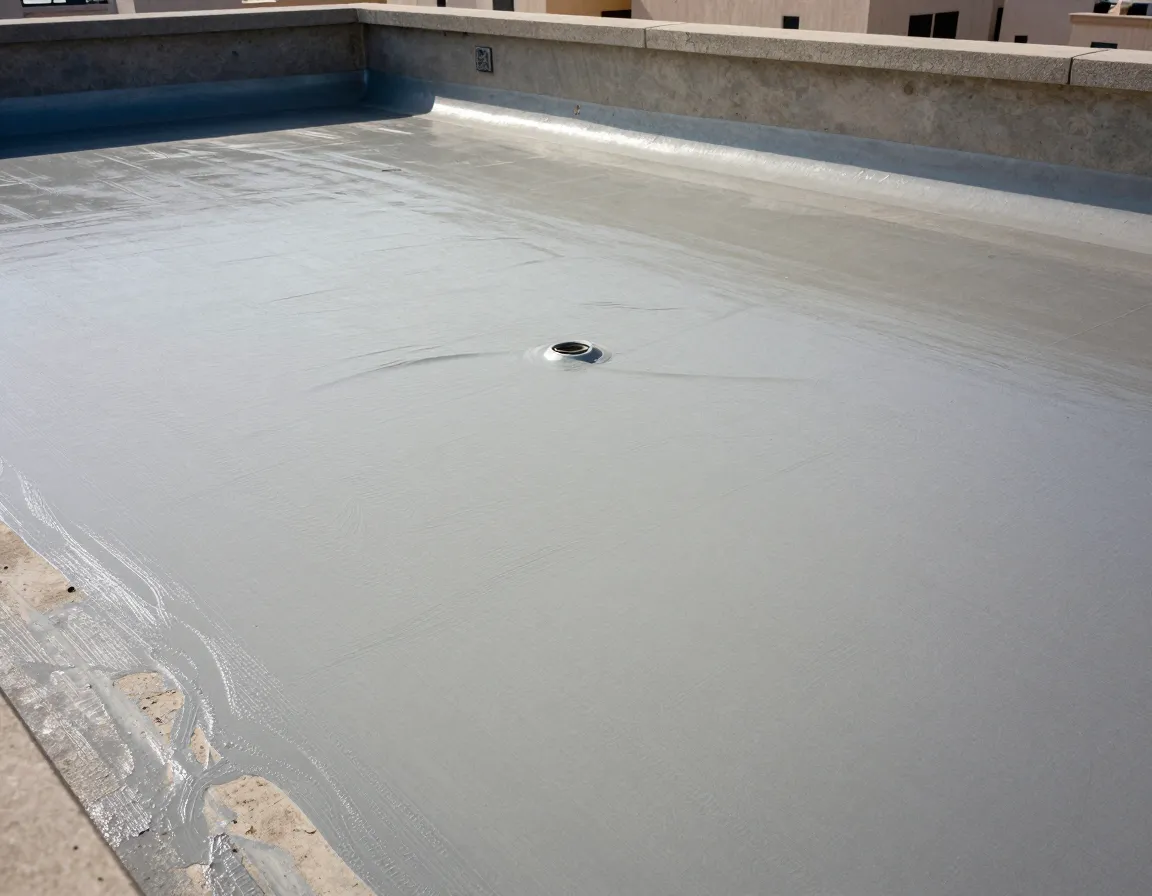
- Skipping waterproofing because SRC was used: SRC resists chemical sulphate attack, not hydrostatic water pressure or dampness. Always apply the specified two coats of bituminous paint or sheet membrane to substructure concrete and below-DPC blockwork before backfilling.
- Storing 50 kg bags directly on sand in humid coastal air: Sharjah and Dubai summer humidity turns floor-stacked cement bags into solid lumps within days. Store bags on raised wooden pallets at least 150 mm off the ground, wrap open pallets in polythene sheeting, and follow First-In-First-Out (FIFO) rotation within 60–90 days of the mill packing date.
- Under-curing SRC concrete in 40°C+ summer heat: Because SRC develops early strength slightly slower than OPC, stopping water curing after 3 days leaves the surface porous—defeating the whole point of low-permeability sulphate protection. Keep SRC concrete continuously moist under wet hessian and polythene for at least 7 to 10 days.
Frequently Asked Questions
Can I use SRC cement for plastering and brickwork above ground in the UAE?
Technically it will harden, but it is not recommended for above-ground plastering or superstructure masonry. SRC costs more per 50 kg bag than OPC, develops early strength slightly slower, and provides no benefit where soil sulphates are absent. Use OPC 42.5N for all plastering, screeds, and blockwork above the damp-proof course.
How do I tell an OPC bag from an SRC bag on a UAE construction site?
Check the printed standard and colour stripe on the 50 kg paper sack before opening it. UAE mills print the exact specification clearly on the front—OPC bags state BS EN 197-1 CEM I 42.5N or ASTM C150 Type I, while SRC bags state Sulphate Resisting Cement, ASTM C150 Type V, or BS 4027, usually in a distinct print colour (such as green or blue) to prevent site mix-ups.
Does SRC cement protect rebar from coastal chloride corrosion in Dubai and Sharjah?
No. SRC protects concrete against sulphate attack (SO₄), not chloride-induced steel corrosion (Cl⁻). Because SRC has low C3A content, it binds fewer free chlorides than OPC. In coastal zones with both sulphates and chlorides, consultants specify low water-cement ratios, supplementary cementitious materials like GGBS or microsilica, adequate concrete cover, and external waterproofing.
How many 50 kg bags of cement are in one tonne and one pallet in the UAE?
Every metric tonne equals exactly 20 bags of 50 kg cement. Most UAE cement mills and building materials yards supply shrink-wrapped pallets of 30 bags (1.5 tonnes) or 40 bags (2.0 tonnes), though loose bags are readily available for smaller villa and maintenance orders.
Need 50 kg OPC or SRC Cement Delivered to Your Site?
Al Tashteb Al Saree Building Materials Trading (Bu Tina, Sharjah) supplies fresh-stock 50 kg OPC and SRC cement, masonry blocks, and cement & masonry materials alongside building chemicals & waterproofing systems. Send your material list for a firm quote in AED incl. 5% VAT with fast delivery across Sharjah, Ajman, and Dubai.
WhatsApp Your Material List for a Firm Quote