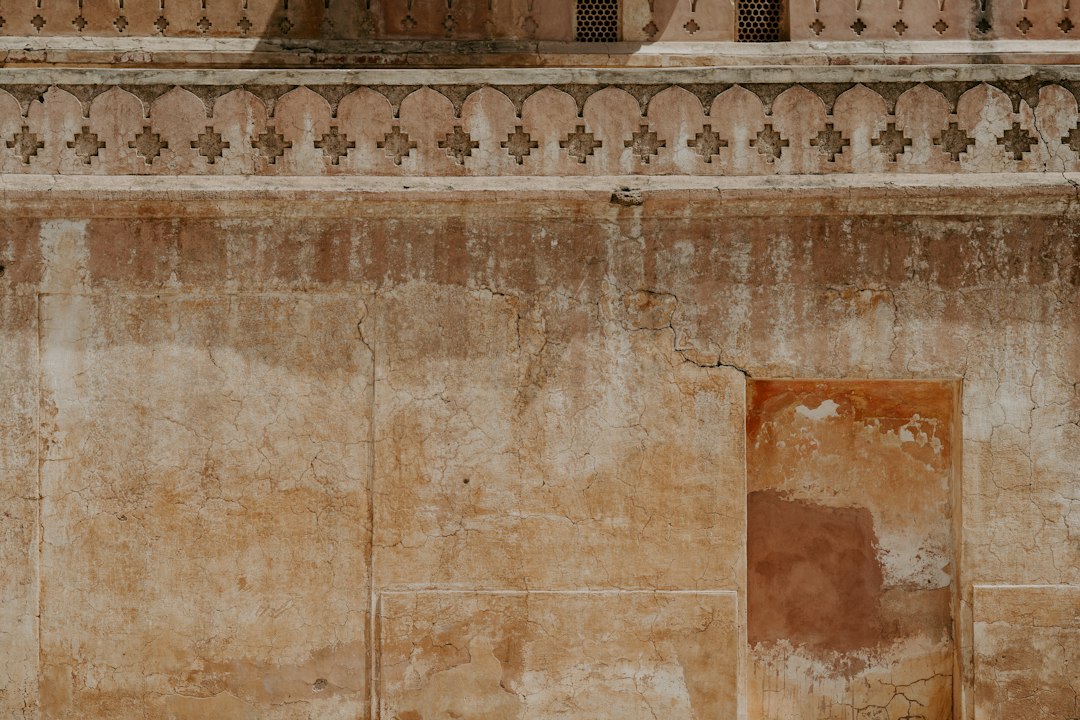
Short answer: the white, powdery or crusty deposit on plaster, block or concrete walls is efflorescence: salts dissolved in water that moves to the surface, evaporates and leaves the salts behind. It needs three things together: soluble salts, water and a path to the surface where the water can evaporate. On a new wall it often fades as the building dries out. If it keeps coming back after the first year, water is getting in somewhere. Fix the water source first, let the wall dry, dry-brush the salt off, then prime with an alkali-resistant primer before painting. Painting over active salts traps them and the paint fails. Here is how to deal with efflorescence on walls.
Key points
- Efflorescence is a symptom of water moving through the wall, not a paint fault.
- Cement is the main salt source; the Brick Industry Association notes concrete and concrete block can hold two to seven times as much soluble material as fired clay.
- New-building “bloom” in the first year often clears on its own; salts that appear later point to a water problem.
- Remove salts dry first. Washing adds water and can bring more salts up.
- National Paints’ surface guide says efflorescence “has to be removed before painting.”
What causes efflorescence
The Brick Industry Association’s Technical Note 23A sets out the three conditions that must all be present:
- Soluble salts in the wall or in contact with it.
- Water in contact with those salts long enough to dissolve them.
- A pore structure that lets the salty water travel to a surface where it can evaporate, driven by differences in temperature or humidity.
Take away any one of them and efflorescence stops. In practice, water is the one you can control.
Where the salts come from
- Cement in mortar, plaster, block and concrete, usually the main source.
- Contaminated sand or water used in mixing, and some admixtures and accelerators.
- Soil and groundwater, carried up into walls in contact with the ground.
- Neighbouring materials such as stone and precast concrete.
- Cleaning chemicals, including acid used wrongly, and salt water.
Where the water comes from in UAE buildings
- Ground moisture rising into boundary walls and ground-floor walls with poor damp-proofing.
- Garden irrigation spraying or pooling against walls.
- Leaking pipes, tanks and AC condensate drains.
- Cracked parapets, copings and sills letting rain in during winter storms.
- Construction water still drying out of new plaster and block.
New-building bloom or a real problem?
| New-building bloom | Recurring efflorescence | |
|---|---|---|
| When | In the first year after construction | After the first year, or on a wall that was clean before |
| Pattern | Fairly even across the wall | Concentrated near the ground, below sills, around pipes or cracks |
| Cause | Construction water drying out | A continuing water source |
| What to do | Let the wall dry; brush off; then prime and paint | Find and fix the water source before any cosmetic work |
How to remove efflorescence, in the right order
- Fix the water source. Repair the leak, redirect the irrigation, seal the crack, repair the coping or sill.
- Let the wall dry. Brushing salts off a wet wall just means they come back next week.
- Dry-brush with a stiff bristle brush and vacuum or sweep away the powder.
- For stubborn deposits, use a cleaner made specifically for masonry and test it on a small area first. Improper use of hydrochloric (muriatic) acid can add chloride salts and make things worse.
- Avoid washing except in warm, dry weather, because extra water brings more salt to the surface. If you do wash, rinse thoroughly and let the wall dry fully.
- Remove loose and powdery material and any blistered paint back to a sound surface.
Preparing the wall for paint afterwards
Cement surfaces are strongly alkaline; National Paints notes fresh concrete can reach pH 13. Once the salts are gone and the wall is dry, use an alkali-resistant primer before your topcoats. Our comparisons cover both the National Paints primers and the Berger primers. National’s surface guide also recommends removing laitance (the weak cement skin on new concrete), loose material and dust, and pressure washing exteriors at a minimum of 2,200 psi, then letting them dry.
If the paint has already bubbled or flaked from salt behind it, see our guide on why paint peels and blisters; the repair approach is the same: remove failed paint, deal with the moisture, then rebuild the system.
Preventing efflorescence
- Keep water out: well-detailed copings, sills and drips; sealed joints; no irrigation onto walls.
- Separate the wall from the ground: proper damp-proofing at the base of walls, and waterproofing on concrete in contact with soil.
- Use clean materials: washed sand and clean water for mortar and plaster.
- Protect walls during construction: keep materials off the ground and covered, and cover unfinished walls in rain.
- Let new work cure and dry before painting.
- Don’t rely on a coating alone. The BIA warns that coatings can trap salts beneath the surface and cause damage if they are the only treatment.
Is efflorescence harmful?
The deposit itself is usually not harmful to the wall; it is mainly a cosmetic problem and a warning sign. What can do damage is the water behind it, and salts crystallising under a paint film or render, which can push the coating off. On reinforced concrete, persistent moisture is also a concern for the steel inside, which is one more reason to fix the source rather than just cover the salt.
Questions we are often asked
Can I just paint over efflorescence?
No. National Paints’ guidance is to remove it before painting, and paint over active salts tends to bubble and flake.
Will vinegar or acid remove it?
Acids can dissolve some deposits, but they can also damage cement surfaces and, in the case of hydrochloric acid, add new salts. Start with dry brushing; use a purpose-made masonry cleaner only if needed and test it first.
How long should new plaster dry before painting?
Follow the primer’s data sheet; for example, Berger’s Weathercoat Tex Primer sheet asks for at least 28 days’ curing on new concrete.
Send us a photo of the wall and tell us where the salts appear and we will suggest the cleaning, primer and paint system. Message us on WhatsApp. Al Tashteb Al Saree Building Materials Trading, Bu-Tina, Sharjah.
Sources
- Brick Industry Association, Technical Note 23A: Efflorescence (PDF)
- National Paints, surface preparation guide, Sec-a-2 (PDF)
Retrieved November 2026. The UAE water sources listed are typical causes, not a diagnosis; a persistent damp problem should be inspected on site.