Short answer: National Zinc Phosphate Primer is an alkyd-based anti-corrosive primer with zinc phosphate pigment, for structural steel, tanks and pipelines in moderately corrosive atmospheres. National describes it as tough and hard with mild chemical resistance. Degrease and clean the steel to Sa 2.5 or St 2, then apply one 40-micron coat. It covers about 11.5 m² per litre and is ready to overcoat after 10 hours at 30°C, with Synthetic Undercoat and Gloss II, or with M.I.O. Undercoat and Enamel Gloss II M.I.O. for external structures.
When to choose Zinc Phosphate
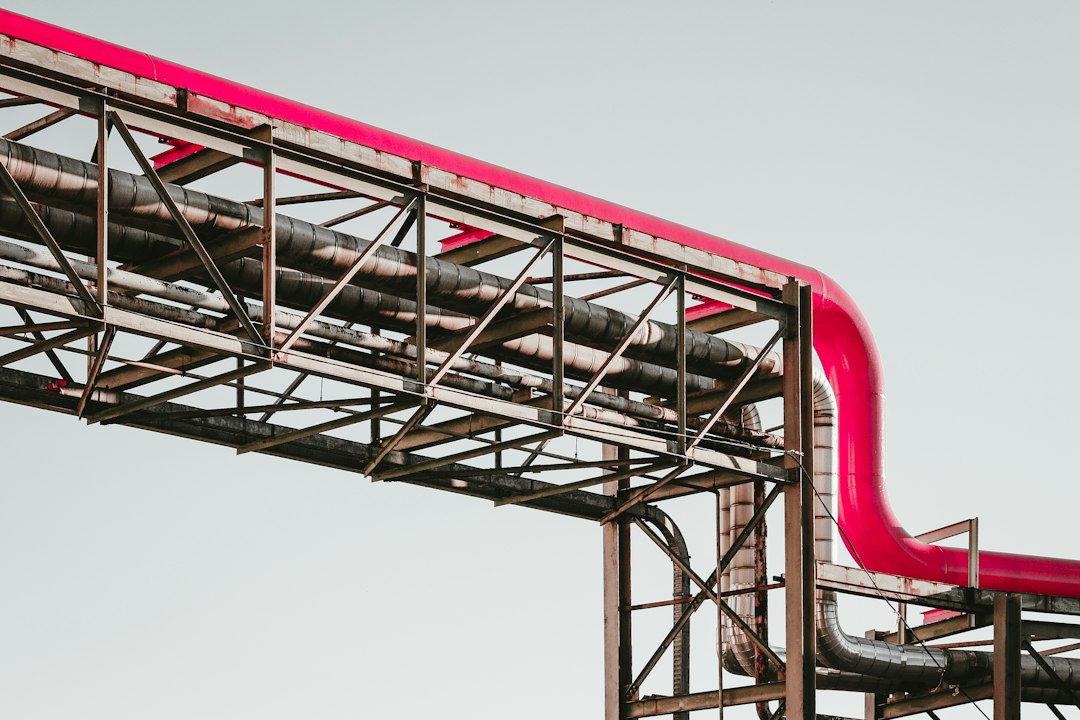
Of National’s four alkyd metal primers, Zinc Phosphate is the one its data sheets list for the most demanding conditions: moderately corrosive atmospheres on structural steel, tanks and pipelines. It is also the primer behind National’s micaceous iron oxide (MIO) system for cranes, towers and bridges.
| Primer | National lists it for | Colour | m² per litre | Recoat at 30°C |
|---|---|---|---|---|
| Zinc Phosphate | Structural steel, tanks, pipelines, moderately corrosive | Grey | 11.5 | 10 h |
| Red Lead | Steel structures, mild to moderately corrosive | Red-orange | 13 to 17.5 | 12 h |
| Red Oxide | Steel, domestic and mildly corrosive | Red | 14 to 18.5 | 8 to 12 h |
| Zinc Chromate | Steel, galvanised, aluminium, brass | Yellow / green | 14 to 19 | 12 h |
Key facts
| Type | Alkyd primer with zinc phosphate pigment, single pack |
| Finish and colour | Flat, grey |
| Volume solids | 46 ± 2% |
| Specific gravity | 1.5 ± 0.05 |
| Spreading rate | 11.5 m² per litre (theoretical) |
| Film per coat | 40 microns dry (85 wet) |
| Drying at 30°C | Touch dry 3 hours; recoat 10 hours; hard dry 18 hours |
| Application | Airless spray (2500 psi, tip 0.022 inch), air spray (50 psi) or brush |
| Thinning | Airless 5 to 10%, air spray 10 to 15%, brush 10%, with National G.P. Thinner |
| Flash point | 38°C |
| Shelf life | 18 months, sealed |
Step 1: prepare the steel
- Degrease with a solvent wash wiped dry, or detergent rinsed off with fresh water.
- Blast to Sa 2.5 for tanks, pipelines and structures, or clean to St 2 for lighter work. National’s guide notes that only blasting removes tightly adhering mill scale.
- Check the profile. The guide gives fine sand (mesh 80) as producing a maximum profile of 35 to 37 microns and iron shot (mesh 14) about 90 microns, measured with a Rugotest No. 3 or Keane-Tator comparator.
- Prime the clean, dry steel before it starts to re-rust.
The guide grades starting steel from A (mill scale, little rust) to D (general pitting). Grades C and D call for blasting rather than hand tools. See the full grade table in our Red Oxide guide.
Step 2: choose the system
| Coat | General steel | External structures (MIO) |
|---|---|---|
| Primer | Zinc Phosphate, 1 × 40 µm | Zinc Phosphate, 1 × 40 µm |
| Undercoat | Synthetic Undercoat, 1 × 40 µm | M.I.O. Undercoat, 1 × 40 µm |
| Finish | Gloss II, 2 × 35 µm | Enamel Gloss II M.I.O., 2 × 35 µm |
| Total dry film | 150 µm | 150 µm |
National lists the MIO coats for external steel, cranes, towers, bridges and pipelines in mild industrial environments, describing them as a barrier against water vapour. For heavy-duty exposure, National’s specifier moves to an epoxy system, which uses a zinc phosphate epoxy primer rather than this alkyd one.
What the data sheet numbers mean
- Coverage = volume solids × 10 ÷ dry film: 460 ÷ 40 = 11.5 m² per litre, exactly the sheet’s figure.
- Wet film = 40 ÷ 0.46 ≈ 87 microns, close to the 85 the sheet recommends.
- Zinc Phosphate has the lowest solids of National’s four alkyd primers, which is why it covers less per litre at the same thickness.
How much to buy
| Steel area | Zinc Phosphate, 1 coat | MIO Undercoat, 1 coat | Gloss II MIO, 2 coats |
|---|---|---|---|
| 50 m² | about 4.3 L | about 4.2 L | 5.9 to 7.7 L |
| 100 m² | about 8.7 L | about 8.3 L | 11.8 to 15.4 L |
| 500 m² | about 43.5 L | about 41.7 L | 59 to 77 L |
Mistakes to avoid
- Using the wrong airless tip. The sheet calls for a larger 0.022-inch tip at 2500 psi, unlike the 0.015 to 0.020 inch on National’s other alkyd primers.
- Overcoating early. Wait the full 10 hours at 30°C; longer in humid or cool conditions.
- Using it on galvanised steel. National lists it for steel; galvanised needs an etch primer and Zinc Chromate.
Frequently asked questions
Zinc Phosphate or Red Oxide?
National lists Zinc Phosphate for moderately corrosive conditions and Red Oxide for domestic and mild ones. Red Oxide covers more per litre; Zinc Phosphate anchors the MIO system for external structures.
Can I topcoat it with epoxy or polyurethane?
The data sheet says to overcoat with National alkyd paints. For epoxy and PU systems, use National’s epoxy primers; see steel painting systems.
Buy in Sharjah and Dubai
Al Tashteb Al Saree is an authorised National Paints retailer in Bu-Tina, Sharjah. Message us on WhatsApp for Zinc Phosphate Primer, undercoats, enamels and G.P. Thinner.
Sources
- National Zinc Phosphate Primer data sheet (PDF)
- National M.I.O. Undercoat data sheet (PDF)
- National Enamel Gloss II M.I.O. data sheet (PDF)
- National Paints surface preparation guide, Sec. A-2 (PDF)
- National Paints systems specifier (PDF)
All via AEC Online, retrieved 4 November 2026. Quantities are our own calculations. The main image is illustrative.