Nothing ruins a fair-faced concrete slab or column line faster than bargain 18 mm shuttering plywood that delaminates on its second pour. In 45°C Sharjah and Dubai summer heat—combined with alkaline concrete slurry and poker-vibrator pressure—low-grade boards swell along cut edges, ripple between timber joists, and leave honeycombed fins that cost thousands of dirhams in grinding and repair mortar.
Whether you are decking a G+1 villa slab or cycling column boxes across a multi-storey commercial frame, choosing the right formwork plywood in the UAE means checking the core veneer species, glue bond class under BS EN 314-2 and BS EN 636, and panel classification under GSO ISO 1096:2013 (Plywood — Classification) and ISO 1096:2021 before the bundle hits your site.
In This Guide
Quick Answer: UAE Formwork Plywood Cheat Sheet
- Standard UAE sheet size & thickness: Almost all structural slab, beam, and column shuttering in Dubai, Sharjah, and Ajman uses 1220×2440 mm (4×8 ft) sheets—representing 2.9768 m² per sheet—in 18 mm thickness (12 mm is reserved for curved soffits, kickers, or light boxing).
- WBP Phenolic (PF) Class 3 (EN 314-2 Class 3 / EN 636-3): Boil-proof phenolic resin bond with a hardwood or birch core and 120–220 gsm phenolic film face; delivers 12 to 20+ pours with proper release agent and edge sealing.
- Melamine (MUF) Class 2 (EN 314-2 Class 2 / EN 636-2): Moisture-resistant melamine-urea-formaldehyde glue for humid/covered concrete work; delivers 5 to 10 pours on villa slabs and footings.
- MR / UF Commercial Grade (Class 1): Interior-only bond that delaminates rapidly when exposed to wet concrete and curing water—use only for dry single-use boxing or blockouts.
- Always calculate cost per pour, not price per sheet: A hardwood WBP phenolic board that survives 15 slab and column cycles costs far less per m² of cast concrete than a cheap poplar-core board that blisters after 3 pours.
Formwork Plywood Grades Compared: Glue Bond, Core Species & Pour Cycles
Walk through any building materials yard in Sharjah or Dubai and every film-faced sheet looks shiny dark brown or black on the outside. The glossy phenolic overlay (typically 120 gsm to 220 gsm paper impregnated with phenolic resin) protects the face from abrasion, but the actual number of reuses is decided inside the board by the core veneer species and the glue line.
Under BS EN 314-2 and BS EN 636 (aligned with GSO ISO 1096:2013), exterior structural shuttering requires a Class 3 (WBP Phenolic) or high-grade Class 2 (MUF) bond tested against boiling water and wet-dry cycling. Hardwood cores (eucalyptus, acacia, or tropical hardwood) and birch cores resist high hydrostatic concrete pressure without deflecting, whereas soft poplar cores compress under tie-rod nuts and soak up curing water as soon as a saw blade cuts the sheet.
Sheet pricing in AED (plus 5% UAE VAT) varies by thickness (12 mm vs 15 mm vs 18 mm), core density (kg/m³), glue resin (WBP PF vs MUF), single-press vs two-time hot-press calibration, and bundle quantity. WhatsApp your exact sheet count for a same-day firm quote from our Bu Tina yard.
| Plywood Grade | Core Veneer & Density | Glue Bond Class (EN 314-2 / EN 636) | Typical UAE Pour Cycles | Best UAE Site Applications |
|---|---|---|---|---|
| Premium WBP Phenolic Film-Faced (18 mm) | Birch or dense Eucalyptus Hardwood (~650–700 kg/m³) | Class 3 (WBP Phenolic PF / EN 636-3) | 15 – 20+ pours | Multi-storey columns, shear walls, fair-faced slabs, repeated table forms |
| Standard WBP Film-Faced Hardwood (18 mm) | Eucalyptus / Acacia Combi Core (~580–630 kg/m³) | Class 3 or Heavy Class 2 (PF / fortified MUF) | 8 – 14 pours | G+1 villa suspended slabs, drop beams, tie beams, retaining walls |
| Economy Film-Faced MUF / Poplar Core (18 mm) | Poplar or light mixed core (~500–540 kg/m³) | Class 2 (MUF / EN 636-2) | 3 – 6 pours | Pad footings, strip foundations, blinding side shutters, short-cycle villas |
| Thin Film-Faced / Commercial Ply (12 mm) | Hardwood or mixed core (~520–600 kg/m³) | Class 2 (MUF) or Class 1 (MR) | 1 – 4 pours | Curved stairs, arch soffits, MEP slab box-outs, chamfer backing |
UAE Site Storage & Cut-Edge Warning: Factory film-faced plywood comes sealed on all four edges with acrylic waterproof paint—but the moment your carpenter rips a 1220×2440 mm sheet on a table saw, that raw cut edge becomes an open sponge for concrete bleed water and 7-day curing hoses. Always reseal field-cut edges with acrylic edge sealer or oil-based paint, and coat the working face with proper chemical mould release agent from our building chemicals range (never burnt diesel or waste engine oil, which stains concrete and ruins plaster adhesion).
Worked UAE Calculation: 18 mm Sheet Count for a 160 m² Villa Slab & Beams
Ordering only the net plan area of a roof slab will leave your shuttering carpenters short once beam sides, slab perimeter edges, and cutting off-cuts are factored in. You can run your project dimensions through our Formwork Calculator, verify concrete m³ with the Concrete Volume Calculator, and check reinforcement steel tonnage on the Slab Rebar Calculator.
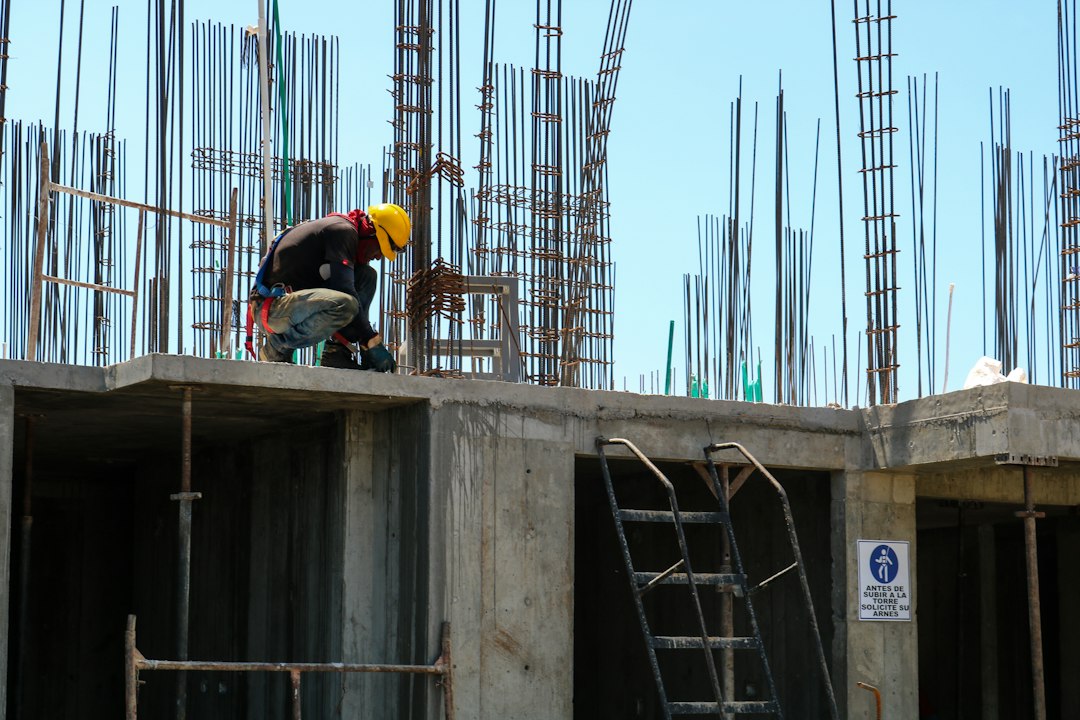
Worked Example: G+1 Villa First-Floor Slab Decking & Drop Beam Sides (18 mm Film-Faced Plywood, 1220×2440 mm)
- 1. Slab Soffit & Beam Bottoms Area: 160.0 m² horizontal plan footprint.
- 2. Drop Beam Side Shutters: 60 linear m of interior/perimeter beams × 0.40 m drop depth × 2 sides = 48.0 m².
- 3. Slab Perimeter Edge Boards: 52 linear m perimeter × 0.20 m slab thickness = 10.4 m².
- 4. Total Net Contact Area: 160.0 + 48.0 + 10.4 = 218.4 m².
- 5. Cutting &Rip-Strip Wastage Allowance (12%): 218.4 × 1.12 = 244.6 m² gross plywood area required.
- 6. Final 18 mm Sheet Order: 244.6 m² ÷ 2.9768 m² per sheet (1.22 m × 2.44 m) = 82.17 → Order 83 sheets of 18 mm WBP film-faced plywood.
QS Tip: If the same 83 sheets are cleaned, oiled, and reused on the roof slab pour, only budget a 15–20% top-up (13–17 extra sheets) for the second floor to replace narrow beam-side rip cuts. Check your total invoice VAT with our UAE VAT Calculator.
5 Common Mistakes on UAE Sites (And How to Avoid Them)
- Coating boards with waste engine oil or diesel instead of chemical release agent: Used motor oil stains concrete dark grey and leaves a greasy film that prevents spatterdash and plaster from bonding—leading to hollow plaster delamination months later. Always apply a thin, even coat of purpose-made chemical mould release oil before fixing rebar.
- Leaving cut edges unsealed around column and beam junctions: Nearly 80% of plywood swelling starts at unsealed saw cuts or tie-rod drill holes. Keep a tin of acrylic edge paint next to the circular saw bench and brush every cut edge before lifting the sheet onto the deck.
- Driving heavy 4-inch nails through the face or prying boards off with crowbars: Over-nailing and steel crowbars tear the phenolic overlay on strike day. Use proper double-headed duplex nails or minimal wire nails from our hardware & fixings section, and release shutters gently with timber wedges.
- Stacking stripped sheets flat in direct 45°C sun without cleaning cement laitance: Dried cement slurry bakes onto the phenolic film and rips the paper layer on the next pour. Scrape off wet laitance immediately after striking with a plastic or wooden scraper, re-oil lightly, and stack flat on level timber bearers under shade.
- Using 12 mm or 15 mm sheets on wide joist spacing meant for 18 mm boards: On standard UAE secondary timber joists (4×2 inch at 300–400 mm centres), thinner boards pillow under a 200 mm wet concrete slab and create wavy ceilings that require thick, expensive plaster dubbing. Stick to calibrated 18 mm hardwood WBP sheets for structural slabs and columns.
Frequently Asked Questions
What is the standard size and m² area of a formwork plywood sheet in the UAE?
The standard shuttering plywood sheet across Dubai, Sharjah, and Ajman measures 1220×2440 mm (4×8 feet), giving an exact surface area of 2.9768 m² per sheet. For structural slabs, beams, and columns, 18 mm is the standard thickness, while 12 mm is used for curved elements and light non-structural boxing.
How can I test if formwork plywood is genuine WBP phenolic before buying a full bundle?
Cut a small 100×100 mm off-cut sample from a sheet and boil it in water for 4 to 6 hours (or run the BS EN 314-2 boil test in a certified lab). Genuine Class 3 WBP phenolic glue lines will remain tightly bonded with zero veneer separation, whereas cheap urea-formaldehyde (MR) boards will delaminate and peel apart in boiling water. Also inspect the cut edge for tight, void-free hardwood core layers.
How many times can 18 mm film-faced plywood be reused on UAE sites?
Reuse depends on core density, glue class, and site handling. Economy poplar-core MUF boards typically last 3 to 6 pours; standard hardwood WBP phenolic boards achieve 8 to 14 pours on villa slabs and columns; and premium birch or dense eucalyptus WBP boards can exceed 15 to 20 pours when cleaned, edge-sealed, and coated with proper mould release oil after every strike.
Why does concrete stick to new film-faced shuttering plywood on the first pour?
Even brand-new phenolic film-faced plywood requires a light, uniform application of chemical mould release agent before the first pour. Without release oil—or if the oil is applied too thickly in puddles—alkaline cement paste bonds microscopically to dry patches or leaves surface blowholes and stains when stripped.
Need 18 mm Shuttering Plywood, Release Oil & Fixings Delivered to Site?
Al Tashteb Al Saree Building Materials Trading (Bu Tina, Sharjah) supplies formwork accessories, mould release agents, and building chemicals alongside tie wires, nails, and hardware & fixings, power tools, and hand tools. Send your material list for a firm quote in AED incl. 5% VAT with fast delivery across Sharjah, Ajman, and Dubai.
WhatsApp Your Material List for a Firm Quote