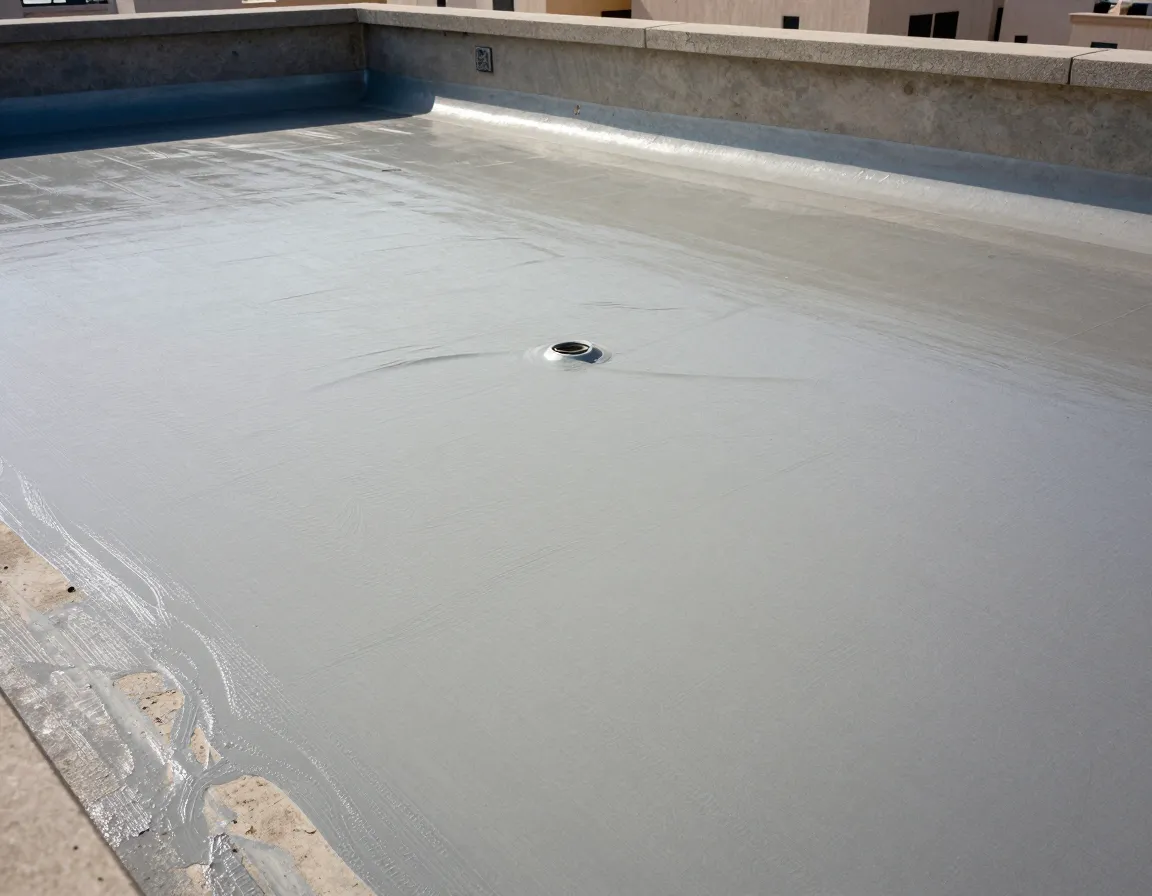
Walk past a newly handed-over villa boundary wall or warehouse apron in Sharjah, Ajman, or Dubai after its first 48°C summer and you will often see diagonal shear cracks tearing through the render at every 15-metre column bay—or polyurethane joint sealant peeling clean out of the gap in long rubbery ribbons. In almost every case, the mason either packed the movement joint with rigid cement mortar, used expanded polystyrene (EPS) packaging foam that collapsed to zero recovery, or gunned sealant straight onto a raw bitumen filler board without a bond-breaker backer rod.
Across the UAE, structural and pavement movement joints are specified under ASTM D1751-23 (Preformed Bituminous/Asphalt Expansion Joint Fillers) and ASTM D1752-18 (Preformed Sponge Rubber, Cork, and Polymeric Joint Fillers). Selecting the right expansion joint filler board in the UAE—and pairing it with the correct closed-cell polyethylene backer rod and 600 ml sealant sausage—keeps concrete slabs, boundary walls, and water tanks moving without cracking.
In This Guide
- Quick Answer: UAE Expansion Joint Filler & Backer Rod Cheat Sheet
- Bitumen Fibreboard vs Closed-Cell PE Foam vs Cork (ASTM D1751 & D1752)
- Worked UAE Calculation: 1220×2440 mm Sheet Count, Backer Rod & 600 ml Sealant Sausages
- 5 Common Mistakes on UAE Sites (And How to Avoid Them)
- Frequently Asked Questions
Quick Answer: UAE Expansion Joint Filler & Backer Rod Cheat Sheet
- Standard UAE sheet size & thicknesses: Both bitumen-impregnated fibreboard and closed-cell polyethylene (PE) joint filler boards come in 1220×2440 mm (2.9768 m²) sheets (or 1000×2000 mm for select PE foams) in 10 mm, 12 mm, 15 mm, 20 mm, and 25 mm thicknesses.
- Bitumen-Impregnated Fibreboard (ASTM D1751): The workhorse compressible board (≥ 35% asphalt content, ≥ 70% recovery after 50% compression) for warehouse ground slabs, interlock/pavement isolation joints, boundary wall columns, and substructure tie beams.
- Closed-Cell Cross-Linked Polyethylene Foam Board (ASTM D1752 / D3575): Non-absorbent, rot-proof, chemical-resistant foam board mandatory for potable water tanks, swimming pools, basements, and joints sealed with light-coloured polyurethane or silicone where bitumen staining is prohibited.
- Backer Rod Sizing Rule (+25% to +30%): Always insert a closed-cell PE foam backer rod 25% to 30% wider than the joint gap (e.g., use a 25 mm diameter backer rod inside a 20 mm wide joint) so it stays compressed at the exact sealant depth and prevents three-sided adhesion.
- Sealant Width-to-Depth Ratio (2:1): For joints 12 mm to 25 mm wide, set the sealant depth to half the joint width (e.g., a 20 mm wide joint takes a 10 mm deep sealant bead).
Bitumen Fibreboard vs Closed-Cell PE Foam vs Cork (ASTM D1751 & D1752)
An expansion or isolation joint only works if the material inside the gap can compress to half its thickness when summer temperatures expand the concrete—and spring back (recover) when winter nights shrink the slab. Under ASTM D1751-23, bitumen-impregnated fibreboard must recover at least 70% of its original thickness within 10 minutes after 50% compression while extruding less than 6 mm out of the joint.
When the joint is permanently submerged (water tanks, sewage sumps, coastal basements) or requires higher elastic recovery (≥ 90%), UAE consultants specify non-absorbent closed-cell polyethylene or elastomeric/cork fillers tested to ASTM D1752-18. Cheap white expanded polystyrene (EPS) styrofoam sheets sold for insulation do not meet either standard—once compressed by the first summer thermal cycle, EPS crushes permanently and leaves an empty void that fills with sand and stones.
Pricing in AED (plus 5% UAE VAT) depends on board thickness (10 mm up to 25 mm), material density (bitumen fibreboard vs 90–100 kg/m³ cross-linked PE foam vs resin-bonded cork), backer rod coil length, and joint sealant chemistry (1-part PU vs 2-part polysulphide). Send your joint schedule or linear metre takeoff for a same-day quote.
| Joint Filler Material | Governing Standard | Compression Recovery | Water Absorption | Best UAE Site Applications |
|---|---|---|---|---|
| Bitumen-Impregnated Fibreboard (10–25 mm) | ASTM D1751-23 | ≥ 70% after 50% compression | Low (15%–20% max by volume) | Slabs on grade, road kerbs, boundary walls, column isolation joints |
| Closed-Cell Cross-Linked PE Foam Board (10–25 mm) | ASTM D1752 / ASTM D3575 | 85% – 95%+ elastic recovery | Near zero (< 1% closed-cell) | Potable water tanks, basements, pools, architectural facade joints |
| Resin-Bonded Cork / Self-Expanding Cork | ASTM D1752 Type II & Type III | ≥ 90% recovery | Expands in moisture to seal tight | Water-retaining civil structures, bridge decks, heavy infrastructure |
| Closed-Cell PE Foam Backer Rod (6–50 mm Ø) | ASTM C1330 (Cylindrical Sealant Backing) | 90%+ resilient cushion | Non-absorbent skin | Depth control & bond-breaker directly beneath PU/silicone joint sealant |
Three-Sided Adhesion & Bitumen Bleeding Warning: Never gun polyurethane, polysulphide, or silicone joint sealant directly onto the top edge of a bitumen-impregnated fibreboard. First, bitumen oils bleed into the uncured sealant, staining light grey or beige sealants yellow-brown and softening the bond. Second, if the sealant bonds to the bottom filler board as well as the two concrete walls (three-sided adhesion), it tears down the middle the first time the joint opens. Always recess the filler board 15–25 mm below the slab surface and push in a closed-cell polyethylene backer rod (or apply bond-breaker tape) before gunning your joint sealants.
Worked UAE Calculation: 1220×2440 mm Sheet Count, Backer Rod & 600 ml Sealant Sausages
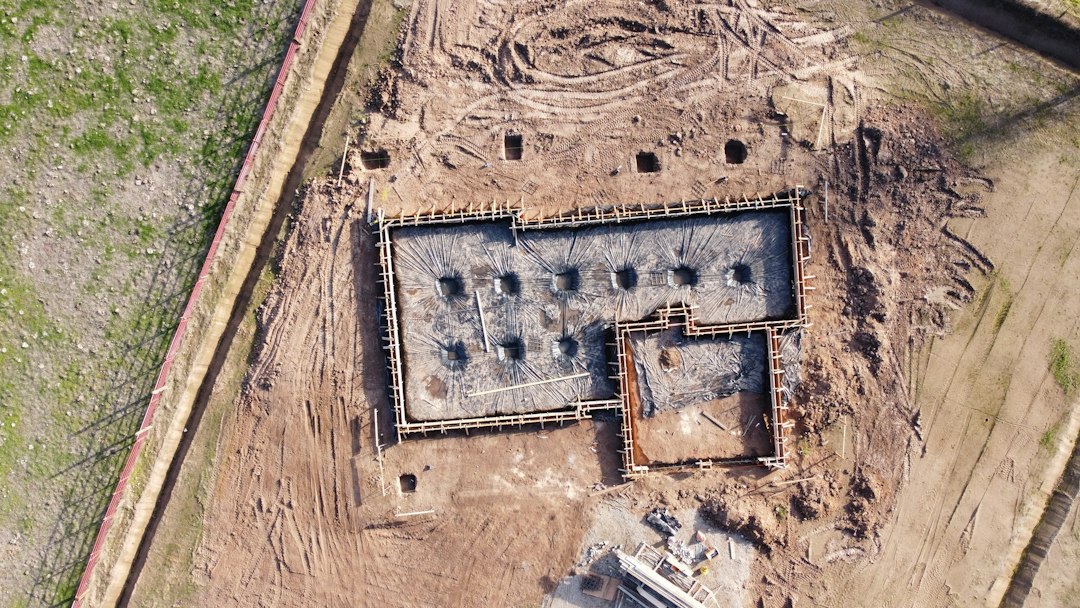
Ordering full 1220×2440 mm filler boards without calculating the strip rip-yield from each sheet is the #1 reason site stores run out halfway through a pour. While working out your slab concrete and wall masonry on our Concrete Volume Calculator, Block Calculator, and Formwork Calculator, use this step-by-step strip formula for your movement joints.
Worked Example: 180 Linear Metres of 20 mm Wide Expansion Joint in a 200 mm Thick Warehouse / Villa Ground Slab
- 1. Filler Board Strip Depth: 200 mm total slab thickness − 25 mm top recess (for backer rod + sealant) = 175 mm (0.175 m) strip height.
- 2. Net & Gross Filler Board Area (20 mm Thick Board): 180 m length × 0.175 m depth = 31.50 m² net area. Add 10% cutting and rip-saw kerf wastage = 34.65 m² gross area.
- 3. Total 1220×2440 mm Sheets to Order: 34.65 m² ÷ 2.9768 m² per sheet = 11.64 → Order 12 sheets of 20 mm × 1220 × 2440 mm Bitumen Filler Board (each 1220 mm wide sheet rips into six 175 mm strips × 2.44 m long = 14.64 linear m per sheet; 12 sheets yield 175.7 m, or order 13 sheets for full 190 m buffer).
- 4. Closed-Cell PE Backer Rod (25 mm Diameter for 20 mm Joint): 180 m + 5% overlap/trim wastage = 190 linear metres of 25 mm Ø PE backer rod.
- 5. Polyurethane Joint Sealant (600 ml Foil Sausages, 20 mm Wide × 10 mm Deep Bead): Cross-section = 0.020 m × 0.010 m = 0.0002 m² = 200 ml per linear metre. Each 600 ml sausage yields 600 ÷ 200 = 3.0 linear metres. For 180 m + 10% gunning wastage (198 m ÷ 3.0) → Order 66 sausages (600 ml) of PU joint sealant + joint primer.
QS Tip: Check your total LPO including 5% UAE VAT using our UAE VAT Calculator.
5 Common Mistakes on UAE Sites (And How to Avoid Them)
- Substituting white EPS packaging styrofoam for ASTM D1751/D1752 filler board: Expanded polystyrene beads crush permanently under the first expansion cycle and dissolve if exposed to solvent-based primers or fuels. Always specify genuine bitumen-impregnated fibreboard or closed-cell cross-linked PE foam board.
- Allowing concrete slurry to bridge over the top or around the ends of the board: Even a 15 mm bridge of hardened concrete across an expansion joint locks the two slabs together and causes spalling right along the joint edge. Butt adjacent filler strips tightly together, tape the butt joints, and use a removable timber or plastic capping strip on top during the pour.
- Puncturing closed-cell backer rod with a sharp screwdriver during insertion: Puncturing a closed-cell PE backer rod releases trapped gas bubbles (outgassing) into wet polyurethane sealant, creating blisters on hot Dubai afternoons. Roll or push the backer rod to depth using a smooth blunt roller or wooden depth gauge tool from our hand tools section.
- Making the sealant bead deeper than it is wide (violating the 2:1 ratio): A deep, narrow plug of sealant (such as 20 mm wide × 25 mm deep) cannot stretch elastically like an hourglass band—it pulls away from the concrete arris. Keep sealant depth at 50% of joint width (minimum 6 mm depth for narrow joints, maximum 12–15 mm depth for wide joints).
- Plastering or tiling straight across a structural expansion joint in a block wall: Installing a 20 mm filler board between two boundary wall columns is useless if the mason lays continuous plaster or porcelain tiles right across the gap. Carry the joint cleanly through the plaster, screed, and tile finish using dedicated aluminium/PVC movement joint profiles and flexible building chemicals & sealants.

Frequently Asked Questions
What is the standard sheet size and thickness of bitumen filler board in the UAE?
In Dubai, Sharjah, and Ajman, bitumen-impregnated fibreboard is stocked in standard 1220×2440 mm (4×8 ft) sheets—covering 2.9768 m² per sheet—in thicknesses of 10 mm, 12 mm, 18 mm, 20 mm, and 25 mm. For structural concrete and paving expansion joints, 12 mm, 20 mm, and 25 mm are the most commonly specified thicknesses.
When should I use closed-cell polyethylene (PE) filler board instead of bitumen board?
Use closed-cell cross-linked polyethylene (PE) filler board in water-retaining or wet structures (potable water tanks, swimming pools, sewage sumps, and basement walls), chemical-exposure floors, or visible architectural joints where dark bitumen oils could bleed into light-coloured polyurethane or silicone sealants.
Do I still need a backer rod if I already installed an expansion joint filler board?
Yes. The filler board fills the lower structural depth of the concrete joint during pouring, while the top 15–25 mm is recessed and fitted with a closed-cell polyethylene backer rod (or bond-breaker tape) before applying sealant. The backer rod sets the exact 2:1 hourglass sealant profile, isolates the sealant from bitumen bleed, and prevents three-sided adhesion that would tear the sealant during movement.
How many linear metres of joint will one 600 ml polyurethane sealant sausage cover?
Divide 600 ml by the joint width (mm) × sealant depth (mm). For a standard 20 mm wide × 10 mm deep expansion joint (200 ml per metre), one 600 ml sausage covers approximately 3.0 linear metres before wastage (allow ~2.7 metres net after 10% site wastage). For a 12 mm wide × 6 mm deep joint (72 ml per metre), one 600 ml sausage covers roughly 8.3 linear metres.
Need Expansion Joint Filler Boards, Backer Rods & PU Sealants?
Al Tashteb Al Saree Building Materials Trading (Bu Tina, Sharjah) stocks bitumen and polyethylene filler boards, closed-cell backer rods, 600 ml polyurethane sealants, and adhesives & sealants alongside building chemicals & waterproofing, cement & masonry, and sausage guns & hand tools. WhatsApp your material list for a firm quote in AED incl. 5% VAT with fast delivery across Sharjah, Ajman, and Dubai.
WhatsApp Your Material List for a Firm Quote