Look at the top left and right corners of a newly plastered door or window opening in a Sharjah or Dubai villa six months after handover. When a 45-degree diagonal crack shoots upward through the paint from the corner of the frame, homeowners usually blame the plasterer. In reality, nine times out of ten, the mason rested a precast concrete lintel on only 60 to 80 mm of a cut, hollow concrete block—or installed the precast lintel upside down with the main tension rebar on top—causing the block web to crush under the masonry triangle load above the opening.
Across the UAE, door and window lintel design, end-bearing lengths, and masonry execution are governed by BS EN 845-2:2013+A1:2016 (Specification for ancillary components for masonry — Part 2: Lintels), BS EN 1996-2:2024 (Eurocode 6 — Design considerations, selection of materials and execution of masonry), and PD 6697:2010. This guide compares precast concrete lintels, cast-in-situ RC lintels, and reinforced AAC lintels—and shows how to calculate exact lintel lengths, bearings, and rebar/concrete quantities.
In This Guide
- Quick-Answer Cheat Sheet: UAE Door & Window Lintel Bearing & Sizing Rules
- Precast RC vs Cast-in-Situ RC vs Precast AAC Lintels: Specs & Comparison
- Worked UAE Villa Lintel Take-Off: Precast Lengths & Cast-in-Situ Rebar/Concrete
- 5 Common Mistakes on UAE Sites (And How to Avoid Them)
- Frequently Asked Questions (FAQs)
Quick-Answer Cheat Sheet: UAE Door & Window Lintel Bearing & Sizing Rules
If you are supervising blockwork or ordering lintel materials for a villa or commercial fit-out in Sharjah, Dubai, or Ajman, apply these mandatory UAE site rules:
- Minimum End-Bearing Length (150 mm to 200 mm Each Side): Under BS EN 845-2 and UAE consultant specifications, a lintel must sit on at least 150 mm of solid masonry bearing at each end for clear spans up to 1.20 m, and 200 mm at each end for spans between 1.20 m and 2.40 m (add 300 mm to 400 mm to your clear door/window opening to get the total lintel length).
- Match Lintel Width & Depth to UAE 400×200 mm Block Courses: Standard UAE hollow and solid concrete blocks are 200 mm high (laid in 100 mm, 150 mm, or 200 mm wall thicknesses). Specify a 200 mm deep lintel (e.g., 100×200 mm, 150×200 mm, or 200×200 mm) so the top of the lintel finishes flush with the adjacent 200 mm block course without awkward brick/tile packing.
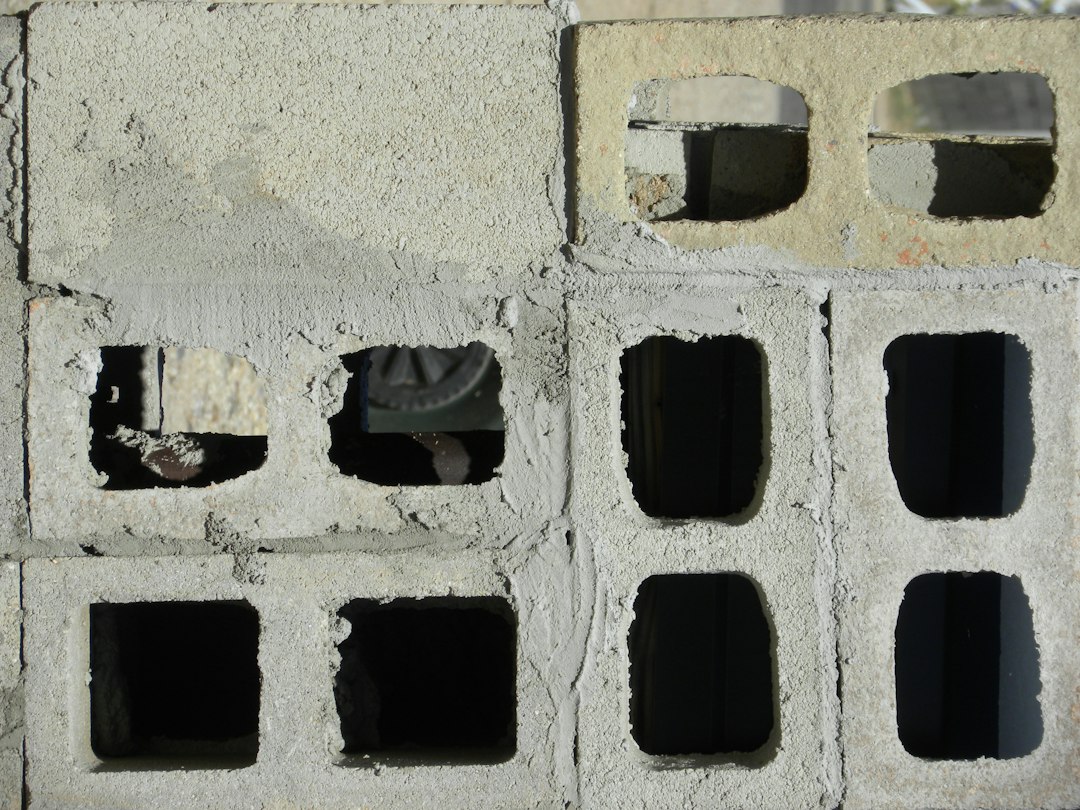
- Solid Bearing Padblocks Required Under Lintel Ends: Never rest the end of a concrete lintel directly on the thin shell of a hollow block. Lay a solid concrete block (or fill the top hollow jamb block cores solid with C20/C25 concrete) directly beneath both lintel bearings.
- Precast vs Cast-in-Situ Span Threshold: Use Precast Reinforced Concrete Lintels (or Precast AAC Lintels on AAC block walls) for standard single/double doors and windows up to 1.50 m – 1.80 m clear span. For wide villa windows (1.80 m to 3.60 m) or seismic continuous lintel bands, pour a Cast-in-Situ C25/C30 RC Lintel on site.
Precast RC vs Cast-in-Situ RC vs Precast AAC Lintels: Specs & Comparison
On UAE projects, contractors use four distinct lintel systems depending on the masonry unit (dense concrete block versus Autoclaved Aerated Concrete AAC block), the clear opening span, and how close the opening sits to a reinforced concrete column.
Precast Reinforced Concrete Lintels conforming to BS EN 845-2:2013+A1:2016 are factory-cast with C30–C35 concrete and high-yield B500B bottom tension bars. Because they arrive fully cured, two masons can bed a 1.30 m or 1.50 m door lintel in 15 minutes and continue laying the block courses above immediately after the mortar firms up—eliminating 3 to 7 days of timber shuttering and propping per opening.
However, when an opening abuts an RC column (leaving zero masonry jamb for a 200 mm end bearing) or spans a wide 2.40 m majlis window, a Cast-in-Situ RC Lintel is essential because its longitudinal T12/T16 mm bars can be chemically dowelled directly into the column face. On AAC block walls, using a dense concrete lintel creates a “cold/hot thermal bridge” and differential thermal expansion that cracks plaster along the lintel outline; matching the wall with a factory-reinforced Precast AAC Structural Lintel keeps the thermal conductivity and plaster suction uniform across the entire wall.
| Technical Parameter | Precast Dense Concrete Lintel | Cast-in-Situ RC Lintel (On Site) | Precast Reinforced AAC Lintel | Hot-Dip Galv. Steel Lintel |
|---|---|---|---|---|
| Governing Standard | BS EN 845-2:2013+A1:2016 | BS EN 1996-2 / BS EN 1992-1-1 | BS EN 845-2 / EN 12602 | BS EN 845-2 / ISO 1461 |
| Standard UAE Cross-Sections (W × H) | 100×150, 100×200, 150×200, 200×200 mm | 100×200, 150×200, 200×200, 200×300 mm | 100×200, 150×200, 200×200, 250×200 mm | Angle / Box profiles to match wall |
| Recommended Clear Span | 0.60 m – 1.80 m | 1.50 m – 3.60 m+ (or continuous band) | 0.60 m – 2.00 m (stocked up to 2.5 m) | 0.60 m – 3.00 m |
| Minimum End Bearing (PD 6697) | 150 mm (span ≤ 1.2 m); 200 mm (span > 1.2 m) | 200 mm – 250 mm (or epoxied into RC column) | 200 mm – 250 mm on full AAC block | 150 mm – 200 mm on solid padstone |
| Installation Speed | Instant (no shuttering or curing wait) | 3–7 days (rebar + shuttering + curing) | Instant (lightweight, two-man lift) | Instant (bolted or mortar-bedded) |
| Best UAE Site Application | Standard doors/windows in hollow/solid block walls | Wide windows, column-adjacent doors & seismic bands | All openings in thermal AAC block walls | Facade stone cladding & MEP cut-outs |
UAE Site & Structural Warning: Never Install a Precast Lintel Upside Down
Most precast concrete and AAC lintels are asymmetrically reinforced: the heavy 12 mm or 16 mm main tension bars sit near the bottom soffit, while the top only has light 6 mm or 8 mm hanger bars. If labourers flip a precast lintel upside down on site, the unreinforced bottom concrete cracks down the middle as soon as two courses of 400×200 mm blocks are laid on top. Always verify the manufacturer’s “TOP” stencil mark or arrow before lifting, and bridge every lintel-to-block joint on both faces with a 150 mm wide strip of GI Expanded Metal Lath (EML) from our Cement & Masonry section before plastering.

Worked UAE Villa Lintel Take-Off: Precast Lengths & Cast-in-Situ Rebar/Concrete
When preparing a masonry and lintel take-off for a G+1 villa in Sharjah or Dubai, first calculate your net wall block count using our Block Calculator (which automatically deducts door and window openings), then schedule your lintels by adding 400 mm (2 × 200 mm end bearings) to every standard opening width.
Worked Quantity Example: 18 Villa Door & Window Openings (Precast + Cast-in-Situ RC)
Project Scope: A G+1 villa with 6 × 800 mm bathroom doors in 150 mm internal block walls, 8 × 1,000 mm room doors in 200 mm block walls, and 4 × 2,000 mm wide living-room windows in 200 mm external walls.
- Group A — 6 × Bathroom Doors (800 mm Clear Span in 150 mm Wall — Precast RC):
• Required lintel length = 800 mm clear span + (2 × 200 mm end bearings) = 1,200 mm (1.20 m).
• Order 6 × Precast Concrete Lintels (150 mm wide × 200 mm deep × 1.20 m long) + 12 × Solid 400×200×150 mm Bearing Padblocks. - Group B — 8 × Bedroom & Majlis Doors (1,000 mm Clear Span in 200 mm Wall — Precast RC):
• Required lintel length = 1,000 mm clear span + (2 × 200 mm end bearings) = 1,400 mm (or standard 1.50 m stock length).
• Order 8 × Precast Concrete Lintels (200 mm wide × 200 mm deep × 1.50 m long) + 16 × Solid 400×200×200 mm Bearing Padblocks. - Group C — 4 × Wide Living Room Windows (2,000 mm Clear Span in 200 mm Wall — Cast-in-Situ C30 RC):
• Total cast length per window = 2,000 mm + (2 × 250 mm bearings) = 2.50 m × 4 windows = 10.0 linear metres of 200×200 mm RC Lintel.
• Concrete Volume (check via our Concrete Volume Calculator): 10.0 m × 0.20 m × 0.20 m = 0.40 m³ net (+10% site waste = 0.44 m³ of C30 concrete, or 4 × 50 kg bags of OPC cement if mixed on site via our Concrete Mix Calculator).
• Rebar Quantities (check via our Rebar Weight Calculator):
– Main bars (4 × T12 mm): 10.0 m × 4 + 10% end hooks = 44.0 m ÷ 12 m = Order 4 bars of T12 mm × 12 m Rebar (~42.6 kg).
– Stirrups (T8 mm @ 150 mm c/c, 0.66 m cut length): 71 links × 0.66 m = 46.9 m ÷ 12 m = Order 4 bars of T8 mm × 12 m Rebar (~19.0 kg).
• GI EML Anti-Crack Plaster Mesh (Both Faces of All 18 Lintels): ~62 linear metres → Order 4 rolls of 150 mm × 16.5 m GI EML Strip Mesh.
Tip: Run your plastering mortar quantities through our Plaster Calculator and add 5% VAT to your masonry requisition with our UAE VAT Calculator.
5 Common Mistakes on UAE Sites (And How to Avoid Them)
- Resting Lintel Ends on 50–75 mm of a Cut Hollow Block: When a door opening falls mid-block, masons sometimes chop a hollow block in half and rest the lintel on a thin 60 mm web. Under BS EN 1996-2:2024, concentrated bearing stress fractures the hollow web and creates a 45-degree corner crack. Always provide a full 150–200 mm bearing over a solid block or grout-filled hollow block cell.
- Butting a Door Opening Tight Against an RC Column Without Dowelling Starter Bars: When an architect places a bedroom door flush against a concrete column, there is zero masonry wall on that side to support a precast lintel. In that location, you must cast the lintel in-situ and drill/epoxy two top and two bottom T12 mm rebar dowels 150 mm deep into the RC column using chemical anchor resin from our Building Chemicals range and an SDS hammer drill from our Power Tools section.
- Dry-Stacking Precast Lintels Without a Full 10–12 mm Mortar Bed: Setting a precast lintel dry on top of rough concrete blocks creates high-pressure point contacts that crack the bearing end. Always lay a full 10–12 mm bed of 1:3 cement-sand mortar under both ends and level the lintel with a spirit level from our Hand Tools department.
- Stacking Four Courses of Heavy Blockwork on an Unpropped Precast Lintel Immediately: Even on a precast lintel, green bedding mortar needs 24 hours to harden. If masons immediately build 1.2 metres of wet blockwork above a 1.80 m precast lintel, the wet mortar squeezes out at the inner edge of the jamb and the lintel deflects. Place a temporary center timber prop under spans over 1.20 m until the masonry above cures.
- Plastering Over the Lintel-to-Block Joint Without GI EML Mesh & Spatterdash: Smooth dense concrete lintels and porous concrete/AAC blocks expand and absorb moisture at different rates. Always apply an SBR-modified spatterdash key coat and nail a 150 mm wide strip of GI Expanded Metal Lath (EML) using masonry nails from our Hardware & Fixings range across every lintel-to-block junction on both sides of the wall.
Frequently Asked Questions (FAQs)
What is the minimum bearing length for a concrete lintel in the UAE?
Under BS EN 845-2:2013+A1:2016 and PD 6697:2010, the minimum end bearing for a concrete or AAC lintel is 150 mm at each jamb for clear openings up to 1.20 metres, and 200 mm at each jamb for clear openings between 1.20 metres and 2.40 metres, bedded on a full solid or concrete-filled masonry unit.
What are the standard precast concrete lintel sizes stocked in the UAE?
To match standard UAE 400×200 mm blockwork courses, precast concrete and AAC lintels are stocked in widths of 100 mm, 150 mm, 200 mm, and 250 mm with a standard depth of 200 mm (or 150 mm for light partitions), in standard lengths of 1.20 m, 1.30 m, 1.50 m, 1.80 m, 2.00 m, and 2.40 m.
When should I use a cast-in-situ RC lintel instead of a precast lintel?
Use a cast-in-situ reinforced concrete lintel whenever the clear window or door span exceeds 1.80–2.00 metres, when the opening sits flush against an RC column (requiring epoxied rebar dowels into the column because there is no block jamb for end bearing), or when the structural drawings specify a continuous seismic lintel band tying all walls together.
What drives the cost of precast concrete and AAC lintels in the UAE?
The unit price per lintel in AED (+ 5% VAT) depends on four main factors: the cross-sectional width and depth (100×200 mm versus 200×200 mm), the total span length (1.20 m up to 2.50 m), material type and internal steel reinforcement weight (high-density precast C35 concrete versus autoclaved aerated concrete AAC or hot-dip galvanized steel), and pallet delivery quantities to site.
Need Precast Lintels, Blocks, Cement, Rebar Dowel Epoxy & EML Mesh on Site?
Al Tashteb Al Saree Building Materials Trading (Bu Tina, Sharjah) supplies masonry blocks, OPC cement, formwork plywood, chemical anchor epoxies for rebar dowels, GI Expanded Metal Lath (EML) strip mesh, GI block mesh, and site Hand Tools across Sharjah, Ajman, and Dubai. Browse our Cement & Masonry, Building Chemicals, and Hardware & Fixings categories or send us your blockwork and lintel schedule on WhatsApp for a fast quote in AED including 5% VAT.
WhatsApp Your Blockwork & Lintel Schedule for an Instant Quote →