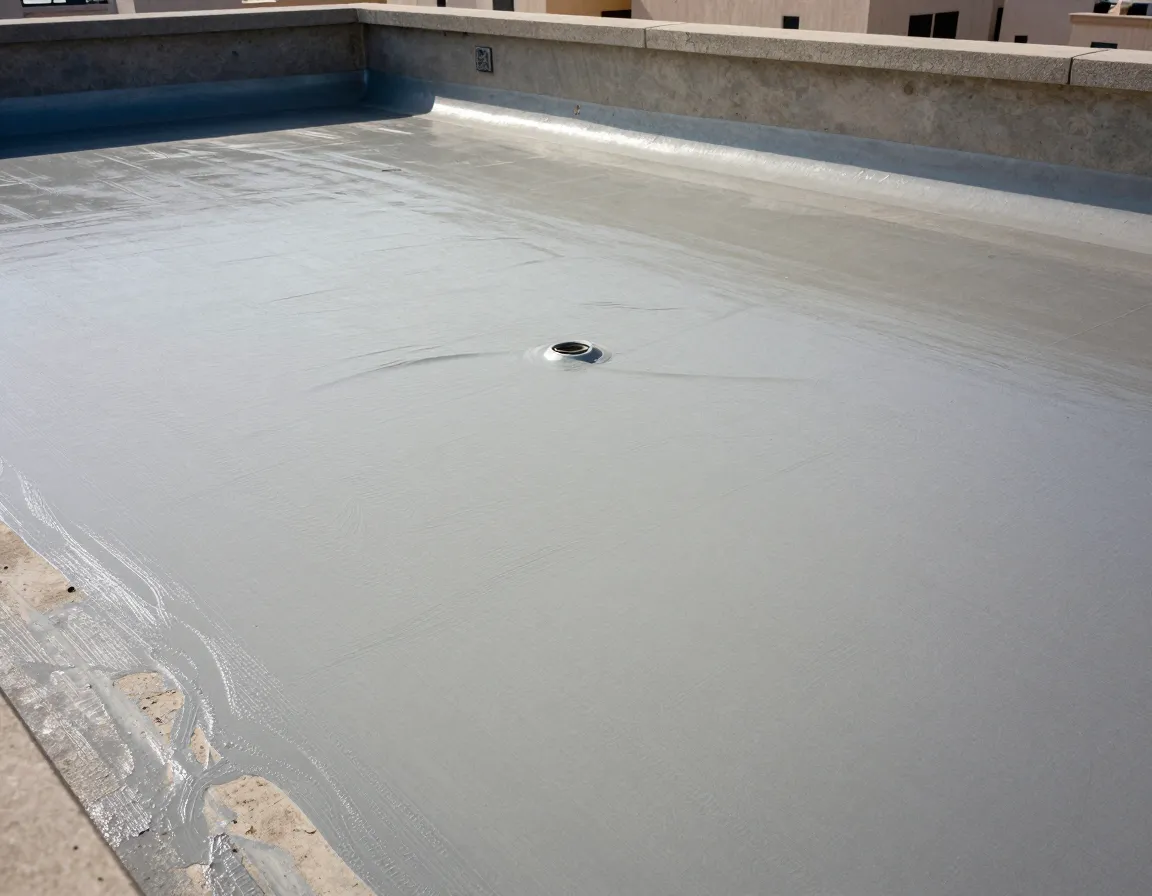
Walk into a newly painted Dubai, Sharjah, or Ajman villa six months after handover and look at the window reveals and column junctions: orange rust bleeding through the white emulsion along external corners, and a razor-straight vertical crack running down the exact line where a concrete column meets the block wall. Both defects trace back to shortcuts during plastering prep—fixing light Z100 electro-galvanized plastering angle bead UAE coastal humidity corrodes in months, or skipping the 200 mm Expanded Metal Lath (EML) strip mesh across dissimilar substrates.
In the UAE, metal plastering beads and expanded lath are governed by GSO EN 13658-1:2011 (Metal lath and beads — Definitions, requirements and test methods) alongside ASTM C1063-22 (Standard Specification for Installation of Lathing and Furring for Portland Cement-Based Plaster) and ASTM C847 (Standard Specification for Metal Lath). Here is how to choose between Z275 Galvanized Steel, Grade 304/316 Stainless Steel, and uPVC plaster beads, pick the right 10 mm to 20 mm bead depth, and calculate exact bundle quantities for your site.
In This Guide
- Quick-Answer Cheat Sheet: UAE Plastering Beads & EML Mesh Rules
- Angle Beads, Stop Beads, Movement Beads & EML Mesh Specifications
- Galvanized (Z275) vs Stainless Steel (SS304/316) vs uPVC Beads in UAE Humidity
- Worked UAE Quantity Calculation: G+1 Villa Plastering Beads & EML Take-Off
- 5 Common Plaster Bead & EML Mistakes on UAE Sites (And How to Avoid Them)
- Frequently Asked Questions (FAQs)
Quick-Answer Cheat Sheet: UAE Plastering Beads & EML Mesh Rules
- Standard Bead Length & Depth: Supplied in 3.0 m lengths (or 2.5 m / 2.7 m for standard floor heights). Common plaster depths are 10 mm, 13 mm, and 15 mm for internal cement render, and 15 mm to 20 mm for external facade render.
- Where to Use Z275 Galvanized Steel Beads: Dry internal living rooms, bedrooms, and corridors only—provided the zinc coating meets Z275 (275 g/m²) hot-dip galvanizing under GSO EN 13658-1.
- Where to Use Stainless Steel (SS304 / SS316) or uPVC Beads: Mandatory for all external villa facades, boundary walls, bathrooms, wet kitchens, and coastal Sharjah/Dubai locations where salt air and alkaline wet cement corrode galvanized noses.
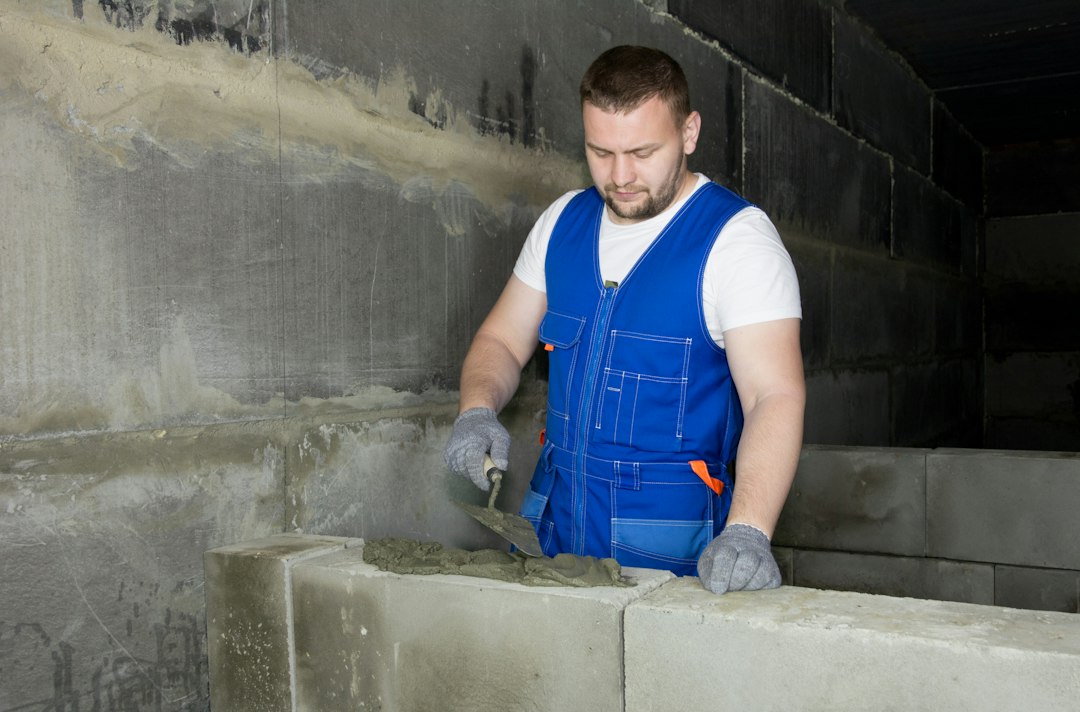
- Expanded Metal Lath (EML) Strip Mesh Rule: Every junction between RC concrete (columns, beams, lintels) and 400×200 mm masonry blocks—plus all chased MEP electrical/plumbing conduits—must be bridged with 150 mm to 200 mm wide EML strip mesh overlapping at least 75 mm to 100 mm onto each side before spatterdash.
- Bed-Joint Block Mesh vs Surface EML Strip Mesh: Do not confuse GI Block Mesh (laid horizontally inside mortar bed joints every 3rd block course during blocklaying) with EML Strip Mesh / Plaster Lath (fixed flat across vertical column-to-block joints and MEP chases on the wall face before cement plastering).
Angle Beads, Stop Beads, Movement Beads & EML Mesh Specifications
Plastering beads do far more than protect corners from trolley impacts—they act as fixed thickness rails for the plasterer’s aluminium straight-edge (darby), guaranteeing plumb 12–15 mm render depth without slow timber screed dots. Here are the five core profiles specified under GSO EN 13658-1:2011 and BS EN 13658-2:
| Profile / Mesh Type | Standard UAE Dimensions | Wing / Depth Sizes | Primary On-Site Function |
|---|---|---|---|
| Render Angle Bead (Corner Bead) | 3.0 m length, expanded mesh wings | 45–55 mm wings; 10, 13, 16, 20 mm depth | Reinforcing 90° vertical external corners, columns, window & door reveals |
| Plaster Stop Bead (Architrave Bead) | 3.0 m length, perforated mesh wing | 10 mm, 13 mm, 15 mm, 20 mm depth | Clean terminal edge at door frames, recessed skirtings, & ceiling shadow gaps |
| Movement / Expansion Bead | 3.0 m length, twin wings + PVC/Santoprene core | 13 mm, 15 mm, 20 mm depth (6–10 mm joint) | Absorbing thermal expansion every 5–6 m on long boundary walls & facades |
| EML Strip Mesh (Coil / Strip Lath) | 150 mm or 200 mm wide × 10 m to 50 m rolls | ~1.0–1.8 kg/m² diamond expanded lath | Bridging concrete column-to-block junctions & electrical conduit chases |
| Full-Sheet Rib Lath / Diamond EML | 2,400 mm × 600 mm (1.44 m² per sheet) | 1.6 kg/m² to 2.5 kg/m² (ASTM C847) | Heavy-duty plaster base over steel columns, curved soffits, & wide pipe shafts |
Site & QA/QC Warning: Never Fix Angle Beads With Gypsum Dabs in External or Wet Areas
To save five minutes per corner, plasterers often stick galvanized angle beads onto bathroom and exterior walls using quick-setting gypsum Plaster of Paris dabs. When wet OPC cement plaster or humidity hits those gypsum dabs, expansive ettringite crystals form (sulfate attack), popping the bead loose and cracking the corner. Always bed plaster beads in matching cement-sand mortar dabs and secure the mesh wings with stainless steel or galvanized masonry nails / washered pins every 600 mm.
Galvanized (Z275) vs Stainless Steel (SS304/316) vs uPVC Beads in UAE Humidity
When your plasterer drags an aluminium straight-edge up and down a metal angle bead, the friction scrapes the thin zinc layer right off the exposed nose of the bead. In the UAE’s coastal climate, that exposed steel strip dictates which material you should order:
- Galvanized Steel (GI Z275 — GSO EN 13658-1): Economical and rigid, ideal for air-conditioned dry interior rooms. Never use GI beads in bathrooms, kitchens, or exterior walls; once the trowelling action scratches the nose, moisture and chlorides trigger red rust streaks through your interior or exterior wall paint.
- Stainless Steel (Grade 304 & Marine Grade 316 — BS EN 13658-2): The gold-standard consultant specification for UAE commercial towers, villa facades, boundary walls, and wet rooms. Even when the aluminium rule scrapes the solid stainless nose during screeding, it cannot rust. Specify SS304 for inland Dubai/Sharjah sites and SS316 within 1–2 km of the Arabian Gulf coastline.
- High-Impact uPVC Plaster Beads (With Alkali-Resistant Fibreglass Mesh Wings): Rapidly growing in popularity across UAE villa projects and Terraco EIFS / textured facade jobs. uPVC beads are 100% rust-proof, non-conductive, immune to desert salt and dampness, and resist denting during construction material handling.
Worked UAE Quantity Calculation: G+1 Villa Plastering Beads & EML Take-Off
Use this Quantity Surveyor take-off method alongside our Plaster Calculator to order exact bundles of 3.0 m beads and 200 mm EML strip mesh rolls:
Worked Example: G+1 UAE Villa (1,200 m² Internal Plaster + 650 m² External Facade & Boundary Wall)
Site Scope: 18 windows (1.5 m × 1.5 m, two-sided reveal corners), 22 internal door openings (2.2 m high), 34 internal wall/column vertical corners (3.2 m floor-to-soffit height), 16 external villa facade corners (7.0 m high), 80 linear metres of boundary wall (requiring movement beads every 5.0 m), and 380 linear metres of RC column/beam-to-blockwork junctions + 140 linear metres of MEP conduit chases.
- 1. Internal Angle Beads (3.0 m Z275 GI, 13 mm depth):
• Internal vertical wall/column corners: 34 corners × 3.2 m = 108.8 m
• Internal window reveals (top + 2 jambs = 4.5 m × 18 windows): 81.0 m
• Total Internal = 189.8 m × 1.08 cutting wastage = 205 m ÷ 3.0 m = 70 pcs of 3.0 m GI Angle Beads. - 2. External & Wet-Area Angle Beads (3.0 m SS304 or uPVC, 15 mm depth):
• External facade corners (16 × 7.0 m = 112.0 m) + External window reveals (81.0 m) + 5 bathroom window/niche corners (25.0 m) = 218.0 m × 1.08 = 235.4 m ÷ 3.0 m = 80 pcs of 3.0 m SS304 / uPVC Angle Beads. - 3. Plaster Stop Beads (3.0 m, 13–15 mm depth):
• 22 door frame perimeters (22 × 5.4 m = 118.8 m) + 95 m recessed tile/skirting transitions = 213.8 m × 1.07 = 228.8 m ÷ 3.0 m = 77 pcs of 3.0 m Plaster Stop Beads. - 4. External Movement Beads (3.0 m SS304 / uPVC):
• 80 m boundary wall (both faces, every 5.0 m = 32 vertical joints × 2.4 m high) = 76.8 m ÷ 3.0 m = 26 pcs of 3.0 m Movement Beads. - 5. Expanded Metal Lath (200 mm Wide EML Strip Mesh):
• Column/beam-to-blockwork junctions (both sides of wall = 380 m) + MEP conduit chases (140 m) = 520 linear metres × 1.10 lap wastage = 572 m → Order 12 rolls of 200 mm × 50 m EML Strip Mesh + 2,500 masonry washer nails.
Commercial Note: Plastering beads are typically packed in cartons or bundles of 25 or 50 pieces (75 m or 150 m per box). Check your total sub-contract material cost with our UAE 5% VAT Calculator and supply your crew with cut-resistant EN 388 work gloves when handling sharp expanded metal lath.
5 Common Plaster Bead & EML Mistakes on UAE Sites (And How to Avoid Them)
- Fixing EML Strip Mesh Tight Against Dry Blockwork Without Spatterdash Penetration: Under ASTM C1063, expanded metal lath must be fully encapsulated in mortar to reinforce the joint and prevent corrosion. If labourers nail thin EML flat against dusty concrete and skim over it without throwing an SBR-modified spatterdash key coat through the diamond openings first, the mortar sits only on top of the mesh and delaminates along the joint.
- Cutting Metal Angle Beads With an Angle Grinder Disc Instead of Aviation Tin Snips: Cutting Z275 galvanized beads with a high-speed abrasive angle grinder disc burns off the protective zinc coating for 15–20 mm back from the cut edge, guaranteeing rust spots at the bottom of every corner. Always cut plaster beads cold using heavy-duty aviation tin snips.
- Using Narrow 100 mm Strip Mesh Across Column-to-Blockwork Junctions: A 100 mm strip gives barely 40–50 mm of overlap onto the concrete column and adjacent block wall, which is too short to bridge thermal movement cracks. UAE consultant specs require a 200 mm wide EML strip centered over the joint (100 mm overlap onto the RC column and 100 mm onto the masonry blockwork).
- Plastering Straight Over Movement Beads Without Pulling the Protective Tape: Movement beads feature a flexible 6–10 mm PVC/neoprene expansion core covered by a removable peel-off strip. If the plasterer buries the flexible core under rigid sand-cement render, the render bridges the expansion joint and cracks down the middle on the first hot afternoon.
- Skipping EML Mesh Over PPR Water Pipe & Electrical Conduit Chases: Deep vertical chases cut into hollow block walls for electrical conduits and plumbing pipes expand and contract differently from the surrounding blockwork. Always fill deep chases in two layers and fix a 150–200 mm strip of EML or alkali-resistant fibreglass mesh across the chase before final plastering.
Frequently Asked Questions (FAQs)
What is the difference between GI Block Mesh and Expanded Metal Lath (EML) strip mesh?
GI Block Mesh (brickwork reinforcement coil mesh) is laid horizontally inside the 10 mm mortar bed joints every 3rd course while laying 400×200 mm concrete blocks to resist wall cracking. Expanded Metal Lath (EML strip mesh) is nailed onto the vertical face of the wall across concrete-to-blockwork junctions and MEP conduit chases immediately before plastering so the render does not crack across dissimilar materials.
Should I use galvanized steel, stainless steel, or PVC angle beads in the UAE?
Use Z275 hot-dip galvanized steel beads only for dry, air-conditioned interior rooms (bedrooms, halls, and offices). For all external villa facades, boundary walls, bathrooms, kitchens, and coastal UAE projects, always use Grade 304/316 Stainless Steel or UV-stabilized uPVC plaster beads so the exposed nose never rusts through the paint finish.
What width of EML mesh is required over column-to-blockwork joints in Dubai and Sharjah?
Standard UAE consultant specifications require a 200 mm wide Expanded Metal Lath (EML) strip centered over every concrete column-to-blockwork and beam-to-blockwork junction, providing a minimum 100 mm overlap onto the concrete element and 100 mm onto the adjacent masonry blockwork, fixed securely with masonry washer pins at 300–400 mm centres.
How far apart should plaster movement beads be installed on UAE walls?
On continuous plastered walls—especially external villa facades and sun-exposed boundary walls—vertical plaster movement (control) beads should be installed every 5.0 m to 6.0 m maximum centres (and directly aligned with any structural or blockwork movement joints) to absorb thermal expansion and prevent random vertical shrinkage cracks.
Order GI, Stainless Steel & PVC Plaster Beads and EML Mesh in the UAE
Al Tashteb Al Saree Building Materials Trading (Bu Tina, Sharjah) supplies contractors across Sharjah, Ajman, and Dubai with 3.0 m angle beads, stop beads, movement beads, EML strip mesh, GI block mesh, 50 kg OPC cement & masonry materials, masonry washer nails & hardware fixings, and plastering trowels, aluminium straight-edges & tin snips—all quoted transparently in AED incl. 5% VAT.