Short answer: moisture-resistant (MR) gypsum board, usually the “green board”, has a water-repellent core and liner, so it absorbs much less water than standard board. Under the European standard EN 520 the common class is H1: no more than 5% total water absorption and no more than 180 g/m² on the surface. That makes it the right board for bathroom and kitchen walls and ceilings, which are humid. It does not make it waterproof. Anywhere water runs or sits, such as inside a shower, you still need a waterproofing membrane behind the tiles. Here is where moisture-resistant gypsum board works, and where it doesn’t.
Key points
- MR board = moisture resistant, not waterproof. It copes with humidity and splashes, not standing or running water.
- EN 520 H1 limits: total water absorption ≤ 5%, surface absorption ≤ 180 g/m². H2 and H3 boards are allowed to absorb more.
- Knauf makes an H1 MR board in Ras Al Khaimah, in 12.5 and 15 mm, with a green paper liner.
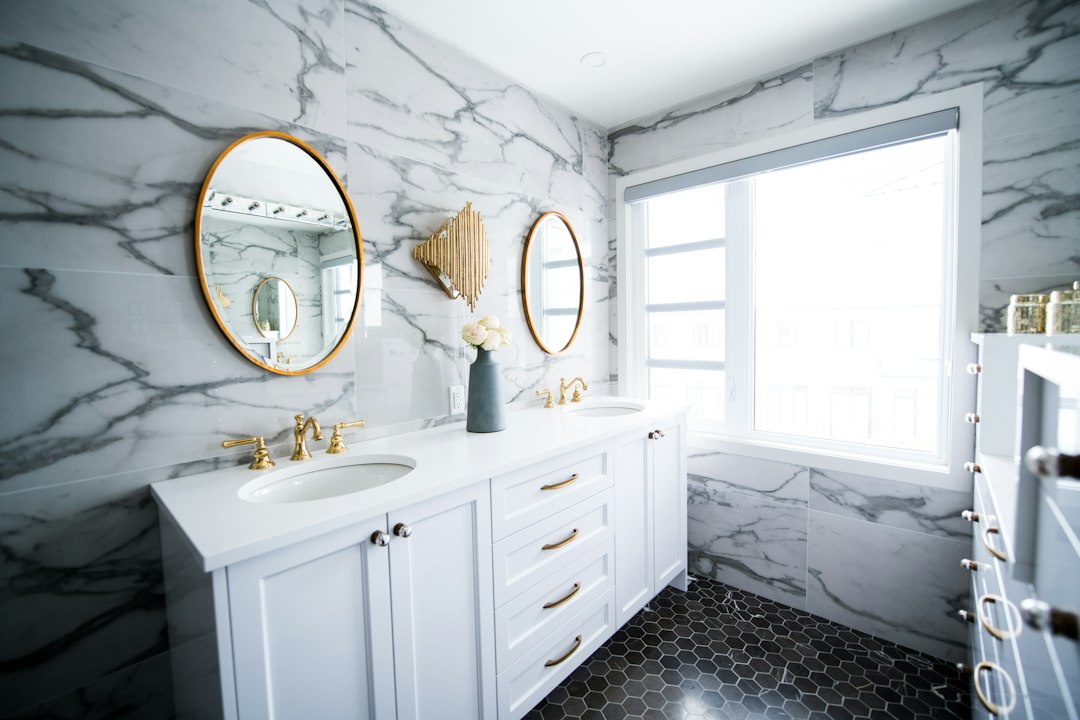
- Use it for bathroom, kitchen and laundry walls and ceilings; add a liquid or sheet membrane in shower zones and behind wet areas.
- Finish it like any gypsum board, then use a primer and paint suited to humid rooms.
How moisture-resistant board differs from standard board
Standard gypsum board is a gypsum core between two paper liners. In a humid room the paper and the core slowly take on moisture, which can soften the board, make it sag on ceilings and give mould something to feed on. Moisture-resistant board adds water-repellent additives to the core and uses treated, usually green, paper. The result absorbs a fraction of the water, so it stays stiff and stable in rooms where steam and splashes are normal.
What the H1 rating means
EN 520, the European standard for gypsum plasterboard, gives moisture-resistant boards an H type with a number. The number tells you how much water the board may absorb in the standard test; the lower the number, the stricter the limit.
| EN 520 class | Total water absorption | Surface water absorption | What it means in practice |
|---|---|---|---|
| H1 | ≤ 5% | ≤ 180 g/m² | The strictest moisture class; the usual “green board” for bathrooms and kitchens |
| H2, H3 | Higher limits than H1 (more absorption allowed) | Less resistant; check the data sheet before using in wet rooms | |
Boards made to the American standard use different wording, such as “moisture and mould resistant”. If your specification calls for EN 520 H1, ask for a board that states H1 on its data sheet. EN 520 types can also be combined: a board marked with both F and H (for example “FH1”) is a fire board that also resists moisture, useful for fire-rated walls around bathrooms. Our fire-rated gypsum board guide explains the F type.
A UAE-made example: Knauf MR-H1
| Classification | EN 520 Type H1 |
| Thickness | 12.5 mm and 15 mm |
| Sheet size | 1200 mm wide; 2400 or 3000 mm long (others on request) |
| Weight | 9.0 kg/m² (12.5 mm); 11.9 kg/m² (15 mm) |
| Edges | Square edge or tapered edge |
| Liner | Green paper |
| Listed uses | Partitions, ceilings and wall linings in kitchens and bathrooms; partitions with a tiled finish; any internal area exposed to humidity |
| Made in | Ras Al Khaimah, UAE |
A 1200 × 2400 mm sheet weighs about 26 kg in 12.5 mm and about 34 kg in 15 mm (our calculation: 2.88 m² × weight per m²). Knauf notes that the system’s properties are guaranteed only when Knauf system components, or products it recommends, are used.
Where MR board belongs, and where it does not
| Location | MR board? | What else you need |
|---|---|---|
| Bathroom ceiling | Yes | Good extract ventilation; a moisture-tolerant ceiling paint |
| Bathroom walls outside the shower | Yes | Waterproofing at the floor junction and around basins is good practice |
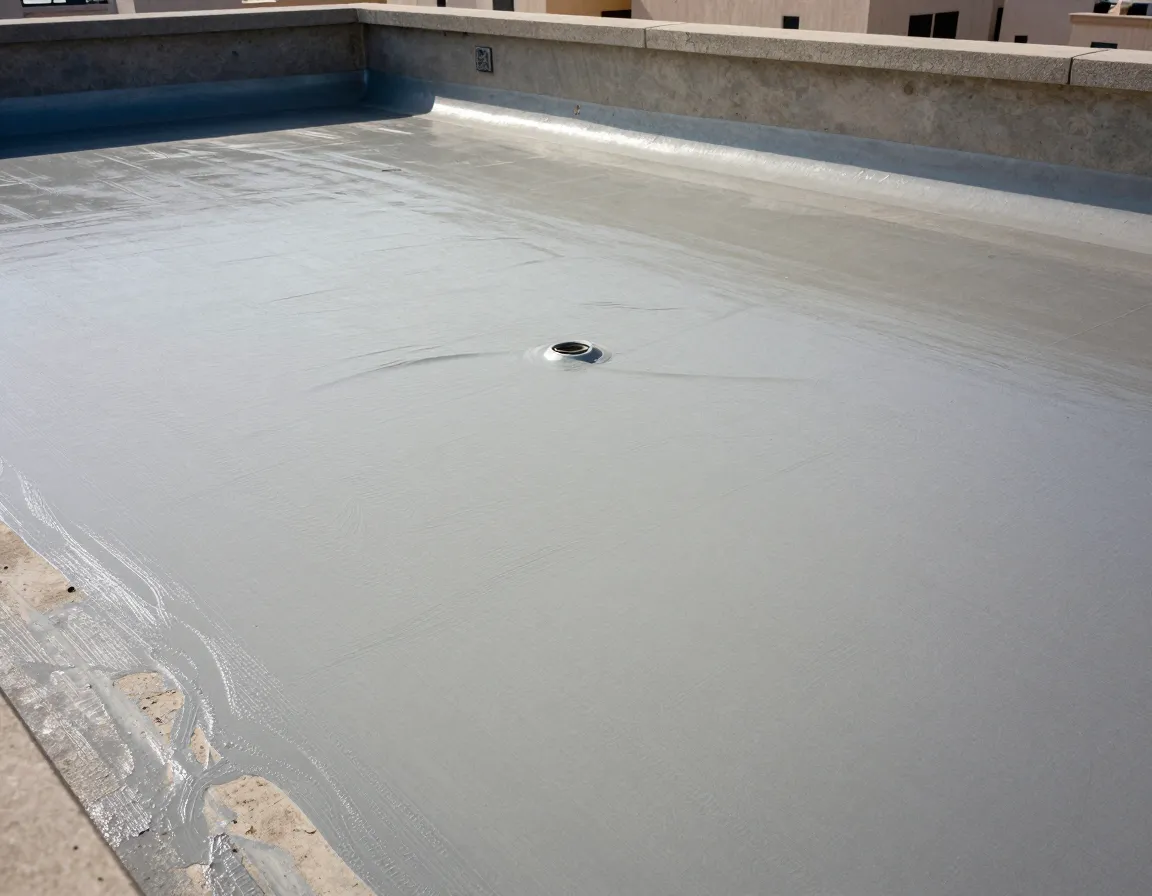
| Inside the shower enclosure | Only as a backing | A waterproofing membrane (tanking) under the tiles, including joints and corners |
| Kitchen walls and ceiling | Yes | Splashback tiles or a washable paint behind sinks and hobs |
| Laundry and utility rooms | Yes | Ventilation, especially with a dryer |
| Outside, or anywhere exposed to rain | No | Use an exterior-rated board or a cement board designed for it |
| Areas that are permanently wet (pools, wet rooms with no tanking) | No | A cement board or a system designed for wet areas |
Building a bathroom wall or ceiling with MR board
- Use the board maker’s framing. Metal studs and ceiling channels from the same system, at the spacing its sheet gives. Tiled walls are heavier, so check the system’s limits for tile weight.
- Fix with corrosion-resistant screws. In humid rooms, ordinary screws can rust and show through the paint.
- Keep the bottom edge off the floor. Leave a small gap above the floor screed and seal it, so the board cannot wick up water from mopping or spills.
- Treat the joints with tape and a compound suitable for humid areas.
- Waterproof the wet zone. In showers, apply a membrane over the board, with reinforcing tape at corners, joints and pipe outlets, before tiling.
- Seal penetrations. Mixer valves, shower arms and drain pipes need sealing collars or sealant so water cannot get behind the tiles.
Painting MR board in bathrooms and kitchens
Once the joints are filled and sanded, prime the whole board, joints and paper alike, so the paint takes evenly. Then use a topcoat that tolerates humidity and can be wiped down. Our guide to National Paints systems for bathroom and kitchen walls sets out the primer and finish options with coverage figures. If you are repainting a ceiling that already shows black spots, deal with the mould first: see how to remove mould before painting.
Why bathroom ceilings fail in the UAE
Many ceiling problems come from the room, not the board. Long hot showers, a weak or broken extract fan and air conditioning that cools the ceiling surface all lead to condensation, and condensation on any ceiling leads to stains, peeling paint and mould. MR board buys you time and stability, but a working extract fan run for long enough after each shower does more than any board or paint.
Mistakes to avoid
- Using standard board in a bathroom “because it will be painted”. Paint does not stop the board taking on moisture from behind or from the edges.
- Tiling a shower straight onto MR board with no membrane.
- Leaving cut edges and screw holes unsealed in wet areas.
- Running the board down onto the wet floor.
- Choosing a matt, porous paint for a steamy bathroom ceiling.
Questions we are often asked
Is green board the same as waterproof board?
No. Green board is moisture resistant. “Waterproof” needs a membrane or a board designed for wet use, such as cement board.
12.5 mm or 15 mm MR board?
12.5 mm is the everyday choice for linings and ceilings. 15 mm adds stiffness and weight and is often specified where the system needs it for fire, sound or tile loads.
Does MR board stop mould?
It makes the board less hospitable to mould, but mould grows on any surface that stays damp. Ventilation and a suitable paint are still essential.
Building or refurbishing a bathroom or kitchen? Send us the wall and ceiling areas and we will price the MR board, framing, screws, joint materials and paint together. Message us on WhatsApp. Al Tashteb Al Saree Building Materials Trading, Bu-Tina, Sharjah. For other board types, see our gypsum board guide.
Sources
- Knauf Moisture Resistant Gypsum Board (MR-H1) data sheet, via AEC Online (PDF)
- Gyproc South Africa, Understanding moisture-resistant boards
Retrieved November 2026. Sheet weights are our own calculations. This guide is general; follow your consultant’s specification and the board maker’s system sheet.