Walk into a newly erected steel warehouse in Sharjah Industrial Area, Jebel Ali, or Dubai Investment Park and tap a hammer against the mortar packed under a 500×500 mm steel column baseplate: if it rings hollow, a mason mixed ordinary 50 kg OPC cement and sand instead of using a pre-bagged non-shrink grout. As normal sand-cement mortar cures, bleed water evaporates and the mix shrinks vertically by 1 to 2 mm—leaving the entire 30-tonne steel column hanging purely on four threaded levelling nuts instead of bearing on the concrete foundation.
Across the UAE, structural baseplate, precast panel, and anchor-pocket grouting is governed by ASTM C1107/C1107M-20 (Standard Specification for Packaged Dry, Hydraulic-Cement Grout — Nonshrink) alongside BS EN 1504-3 Class R4 and BS EN 1504-6. Choosing the right non-shrink cementitious grout in the UAE—and calculating the exact 13.0 to 13.5 litre wet yield per 25 kg bag—guarantees 100% void-free bearing contact and 60+ MPa compressive strength.
In This Guide
- Quick Answer: UAE Non-Shrink Grout Cheat Sheet (Yield, Gap Depth & Water Ratio)
- GP Cementitious vs Dual-Shrinkage vs Epoxy Grout (ASTM C1107 & EN 1504-6)
- Worked UAE Calculation: 25 kg Bag Quantities for 24 Steel Column Baseplates & Bolt Pockets
- 5 Common Mistakes on UAE Sites (And How to Avoid Them)
- Frequently Asked Questions
Quick Answer: UAE Non-Shrink Grout Cheat Sheet (Yield, Gap Depth & Water Ratio)
- Exact 25 kg bag yield: One 25 kg bag of standard general-purpose (GP) non-shrink cementitious grout mixed at flowable consistency yields 13.0 to 13.5 litres (0.0133 m³) of wet grout—meaning you need 75 to 77 bags (25 kg) per 1.0 m³ of grouting volume.
- Standard single-pour gap thickness: General-purpose non-shrink cementitious grouts are engineered for gap depths of 10 mm to 75 mm (up to 100 mm) in a single pour.
- Thick sections above 100 mm: Never pour pure neat GP grout deeper than 100 mm in one lift, or heat of hydration will crack the block. Either use a dedicated thick-section grout or bulk out the GP grout with 50%–100% by weight of clean, washed 10 mm single-size coarse aggregate as permitted by the technical datasheet.
- Mixing water discipline: Use 3.5 to 3.8 litres of chilled water per 25 kg bag for trowelable consistency, or 4.2 to 4.5 litres per 25 kg bag for free-flowing pouring consistency—never exceed the maximum water limit on the bag.
- 28-day compressive strength benchmark: Standard UAE structural GP grouts achieve ≥ 25 MPa at 1 day, ≥ 45 MPa at 7 days, and 60 to 65+ MPa at 28 days.
GP Cementitious vs Dual-Shrinkage vs Epoxy Grout (ASTM C1107 & EN 1504-6)
Under ASTM C1107/C1107M-20, non-shrink hydraulic-cement grouts are classified by how they compensate for volume loss: Grade A (Pre-hardening / plastic expansion) generates controlled gaseous micro-expansion (up to 1%) during the first 15 minutes to 3 hours while the grout is still plastic; Grade B (Post-hardening expansion) expands in the hardened state; and Grade C (Combination / dual-shrinkage compensated) controls volume across both the plastic and hardened stages.
Furthermore, structural grouts specified by Dubai and Sharjah consultants typically carry BS EN 1504-3 Class R4 (structural repair mortar ≥ 45 MPa compressive strength, elastic modulus ≥ 20 GPa, chloride ion content < 0.05%) and BS EN 1504-6 certification for anchoring deformed steel reinforcing bars and tie-down holding bolts inside concrete foundations.
Price per 25 kg bag or 3-part epoxy kit in AED (plus 5% UAE VAT) depends on strength class (60 MPa GP cementitious vs 75–80 MPa dual-expansion precision grout vs 95–100+ MPa 3-component epoxy resin grout), pallet volume, and delivery location across Sharjah, Ajman, and Dubai. Send your baseplate schedule for a firm same-day quote.
| Grout Type | Governing Standard & Mechanism | Single-Pour Gap Thickness | Typical 28-Day Cube Strength | Best UAE Site Applications |
|---|---|---|---|---|
| General Purpose (GP) Non-Shrink Cementitious (25 kg Bag) | ASTM C1107 Grade A, BS EN 1504-3 Class R4 & EN 1504-6 (Plastic expansion) | 10 mm – 75 mm (up to 100 mm) | 60 – 65 MPa | Warehouse steel column baseplates, precast wall/slab joints, tie-rod holes, MEP pump bases |
| High-Flow / Dual-Shrinkage Precision Cementitious (25 kg Bag) | ASTM C1107 Grade C, EN 1504-6 (Plastic + hardened expansion) | 10 mm – 100 mm | 70 – 80+ MPa | Heavy portal frames, bridge bearing pads, long-flow baseplates with tight access |
| Thick-Section / Aggregate-Extended Cementitious Grout | BS EN 1504-3 Class R4 (Low heat evolution with 10 mm aggregate) | 75 mm – 300 mm+ | 55 – 65 MPa | Deep foundation pockets, underpinning voids, mass plinth rebates |
| 3-Part Non-Shrink Epoxy Resin Grout (Resin + Hardener + Filler Kit) | BS EN 1504-6, ASTM C579 (Chemical cure, zero water shrinkage) | 10 mm – 120 mm (grade dependent) | 85 – 105+ MPa (within 7 days) | Crane rails, vibrating generators/compressors, chemical plants, rapid 24-hour loading |
UAE Summer Pour & Trapped Air-Pocket Warning: In 40°C+ UAE summer weather, non-shrink grout mixed with warm tap water loses its flow and starts its 15-minute gaseous expansion inside the mixing bucket before it even reaches the baseplate—defeating the non-shrink mechanism completely. Always store 25 kg bags under shade, mix with chilled water (< 20°C) using a slow-speed mechanical paddle mixer (400–500 rpm), and pour continuously from one side of the baseplate only using a 150–200 mm raised head-box hopper so the advancing wave pushes air out the opposite vent side instead of trapping huge air pockets underneath the steel plate.
Worked UAE Calculation: 25 kg Bag Quantities for 24 Steel Column Baseplates & Bolt Pockets
When estimating structural grouting for a steel portal-frame warehouse or mezzanine in Sharjah or Dubai, always calculate the volume of the under-plate gap, the 45° perimeter formwork shoulders, and the holding-down bolt pockets together. You can verify your main concrete pedestals and anchor steel on our Concrete Volume Calculator, Concrete Mix Calculator, and Rebar Weight Calculator.
Worked Example: 24 Steel Warehouse Columns (500×500 mm Baseplate, 40 mm Grout Gap + 50 mm Perimeter Shoulder + Four Bolt Pockets Per Column)
- 1. Grout Box Footprint (Baseplate + 50 mm Formwork Clearance Each Side): $600\text{ mm} \times 600\text{ mm} \times 40\text{ mm depth} = 0.60\text{ m} \times 0.60\text{ m} \times 0.040\text{ m} = \mathbf{0.0144\text{ m}^3\text{ (14.4 litres)}}$ per column.
- 2. Four Holding-Down Bolt Pockets Per Column (100×100 mm × 250 mm Deep): $4 \times (0.10\text{ m} \times 0.10\text{ m} \times 0.25\text{ m}) = \mathbf{0.0100\text{ m}^3\text{ (10.0 litres)}}$ per column.
- 3. Total Net Grout Volume Per Column: $14.4 + 10.0 = \mathbf{24.4\text{ litres}}$ per column.
- 4. Total Volume Across 24 Columns (+ 10% Hopper & Trim Wastage): $24 \times 24.4\text{ L} = 585.6\text{ L net} \times 1.10 = \mathbf{644.2\text{ litres (0.644 m}^3\text{) gross}}$.
- 5. Final 25 kg Bag Order (at 13.3 Litres Yield Per 25 kg Bag): $644.2\text{ L} \div 13.3\text{ L/bag} = 48.44 \rightarrow$ Order 49 bags (or 50 bags = 1.25 tonnes) of 25 kg Non-Shrink Cementitious Grout.
QS Tip: Check your final invoice total with 5% UAE VAT included on our UAE VAT Calculator.
5 Common Mistakes on UAE Sites (And How to Avoid Them)
- Pouring non-shrink grout from all four sides of a baseplate at once: Pouring around the entire perimeter traps a giant air bubble dead-centre under the steel plate where vertical column load is highest. Seal three sides tightly with timber shutters, build a raised 150 mm pouring hopper along one long side, and pour continuously from that single side until grout rises cleanly out of the opposite vent gap.
- Forgetting to pre-soak the concrete pedestal for 2 to 4 hours before pouring: A bone-dry Dubai concrete column neck sucks moisture out of the leading edge of the grout stream, freezing the flow halfway under the plate and causing plastic shrinkage cracks. Flood the scabbled concrete surface and bolt pockets with water for at least 2 hours, then sponge or blow out all free-standing puddles immediately before pouring (Saturated Surface-Dry / SSD condition).
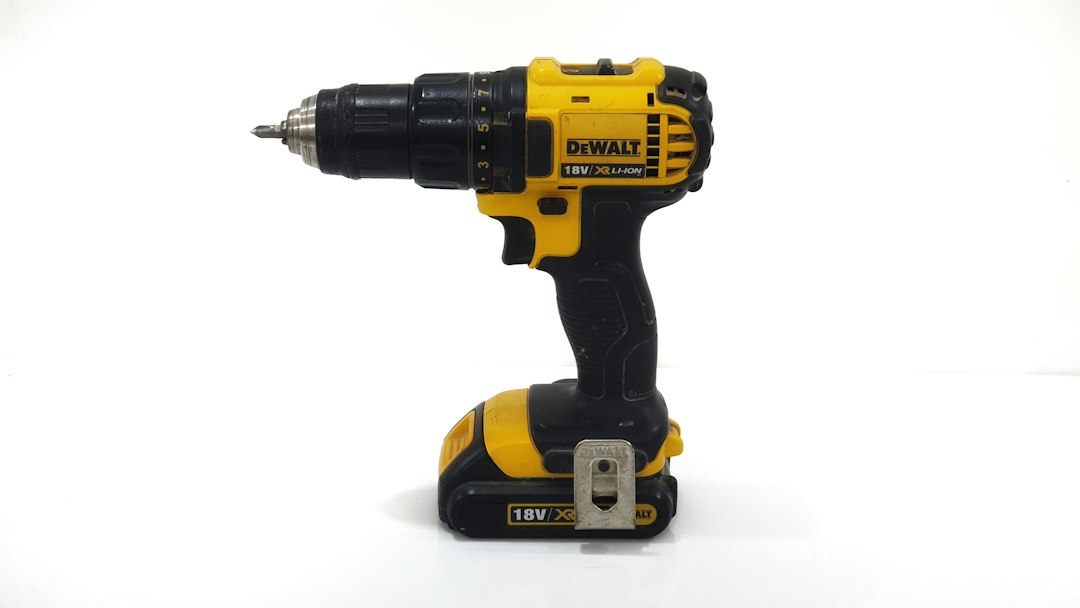
- Hand-mixing with a shovel or adding extra water to “help it flow”: Non-shrink grout requires high-shear mechanical dispersion using a slow-speed drill and spiral paddle from our power tools range for 3 to 5 full minutes. Hand-mixing leaves dry lumps, and adding extra water causes bleed-water separation right under the steel plate.
- Leaving wide unrestrained grout shoulders (> 50 mm) exposed outside the baseplate edge: Non-shrink grout is designed to expand under confinement beneath the steel plate. Unrestrained shoulders wider than 40–50 mm outside the plate edge will crack radially—trim shoulders at a neat 45° chamfer as soon as the grout reaches initial set, and coat exposed edges immediately with acrylic curing compound from our building chemicals store.
- Leaving steel levelling shims or pack plates buried permanently under the baseplate after cure: Temporary steel wedge shims create hard point-load concentrations that crack the grout bed when the building frame deflects. Back off or knock out temporary levelling wedges 48–72 hours after grouting (once compressive cubes reach specified transfer strength) and torque the holding-down nuts with calibrated spanners from our hand tools and hardware & fixings range.
Frequently Asked Questions
How many 25 kg bags of non-shrink grout are needed for 1 m³ in the UAE?
One 25 kg bag of standard general-purpose non-shrink cementitious grout mixed with 4.2 to 4.5 litres of water yields approximately 13.2 to 13.5 litres (0.0133 m³) of wet grout. Dividing 1,000 litres (1.0 m³) by 13.3 litres gives 75.2 bags—so always budget 75 to 77 bags of 25 kg per cubic metre before site wastage.
What is the minimum and maximum thickness for pouring non-shrink cementitious grout?
Standard flowable general-purpose non-shrink grouts (such as Conbextra GP, SikaGrout, or Weber/Saint-Gobain equivalents) are designed for gap thicknesses between 10 mm minimum and 75 mm to 100 mm maximum in a single unreinforced lift. For deep pockets between 100 mm and 250 mm, add 50% to 100% by weight of washed 10 mm coarse aggregate (pea gravel) or use a low-heat thick-section grout to prevent thermal cracking.
When should I use 3-part epoxy grout instead of cementitious non-shrink grout?
Use a 3-component non-shrink epoxy resin grout whenever the baseplate supports heavy dynamic vibration or impact loads (such as crane rails, diesel generators, compressors, or turbine skids), where aggressive chemical or oil spillage occurs, or when very high early compressive strength (80+ MPa within 24–48 hours) is required for rapid commissioning.
Why did my non-shrink grout crack around the outer edges of the steel baseplate?
Edge cracking around a baseplate almost always results from three site errors: leaving the unrestrained perimeter shoulder too wide (over 50 mm outside the steel plate), adding too much mixing water, or failing to cure the exposed grout shoulder immediately after stripping the side shutters. Trim exposed shoulders at a 45° angle and seal them immediately with an acrylic curing membrane or wet hessian.
Need 25 kg Non-Shrink Grout, Curing Compounds & Anchor Fixings?
Al Tashteb Al Saree Building Materials Trading (Bu Tina, Sharjah) supplies 25 kg non-shrink cementitious grouts, epoxy anchoring systems, curing compounds, and building chemicals alongside Terraco repair & grouting mortars, anchor bolts & fixings, and cement & masonry supplies. WhatsApp your material list for a firm quote in AED incl. 5% VAT with fast delivery across Sharjah, Ajman, and Dubai.
WhatsApp Your Material List for a Firm Quote