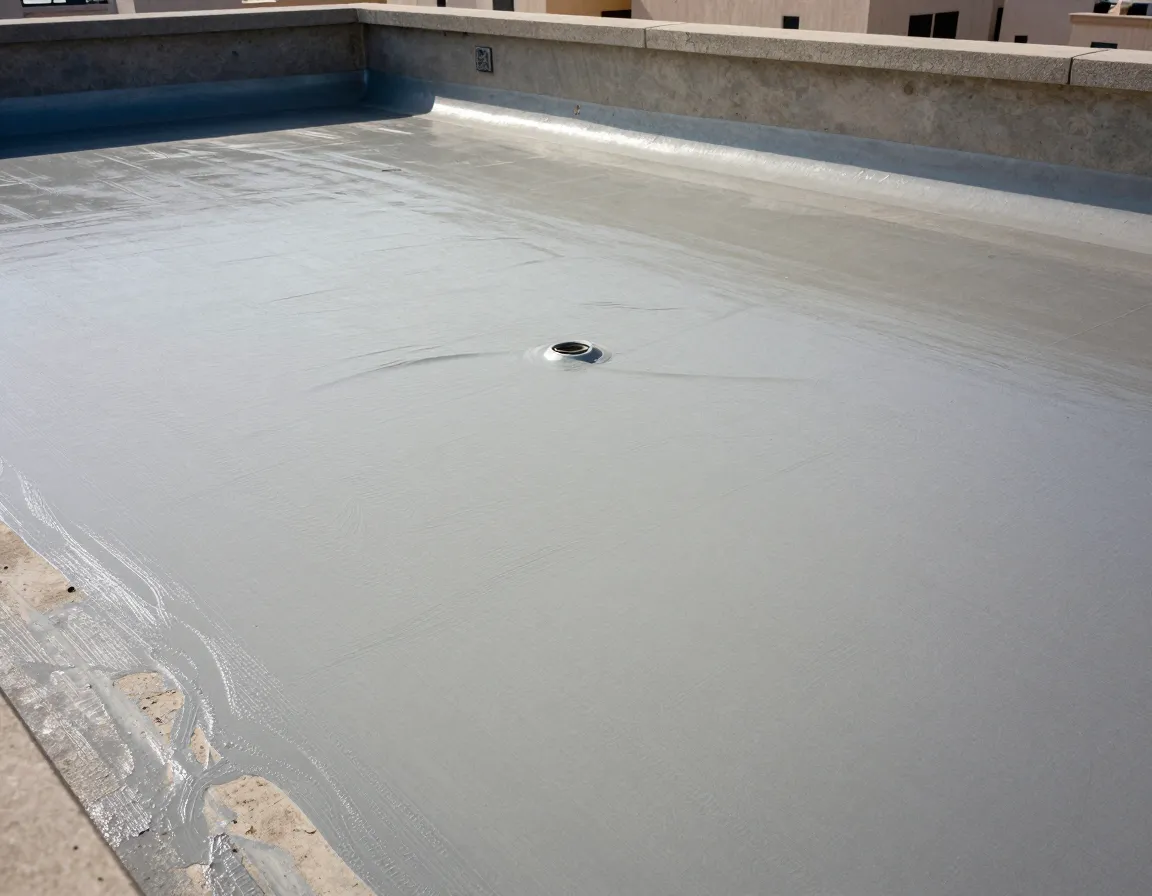
Fill a newly cast underground villa water tank or basement lift pit in Sharjah, Ajman, or Dubai for its 72-hour hydrostatic flood test, and nine times out of ten any damp leak line appears in the exact same spot: the horizontal 150 mm concrete kicker joint where the vertical RC wall meets the base slab. Either the upper flange of the PVC waterstop UAE drawings specified folded flat when ready-mix concrete was dumped from the chute, or the carpenter overlapped two roll ends with binding wire instead of heat-welding them with a 200°C splicer iron.
In the UAE, flexible polyvinyl chloride (PVC) waterstops for water-retaining and water-excluding concrete structures are tested for tensile strength and elongation under ASTM D412-16(2021) (Standard Test Methods for Vulcanized Rubber and Thermoplastic Elastomers—Tension) and tear resistance under ASTM D624-00(2020) (Standard Test Method for Tear Strength of Elastomers) (alongside US Corps of Engineers CRD-C 572-74 and BS 2571). Here is how to choose between internal PVC waterstops, external rearguard profiles, and hydrophilic swellable waterstop bars, size the exact width (150 mm, 200 mm, or 250 mm), and calculate roll quantities for your tank or basement.
In This Guide
- Quick-Answer Cheat Sheet: UAE Waterstop Profiles, Widths & Joint Rules
- PVC Waterstops vs Hydrophilic Swellable Bars: Technical Specifications
- Internal vs External Rearguard PVC vs Swellable Bars: Where to Use Each
- Worked UAE Quantity Calculation: 6 m × 4 m Underground RCC Water Tank
- 5 Common Waterstop Mistakes on UAE Sites (And How to Avoid Them)
- Frequently Asked Questions (FAQs)
Quick-Answer Cheat Sheet: UAE Waterstop Profiles, Widths & Joint Rules
- Waterstop Width Rule: Match the PVC waterstop width approximately to the concrete wall or slab thickness: use 200 mm wide PVC waterstop for standard 200 mm thick villa water tank walls, and 250 mm wide PVC waterstop for 250–300 mm basement retaining walls and raft slabs.
- Plain Web vs Centre-Bulb PVC Profiles: Use Plain Web (Dumbbell) waterstops strictly for non-moving construction joints (kickers & day-pour joints); use Centre-Bulb waterstops for expansion and movement joints so the hollow bulb stretches and shears without tearing.
- Internal vs External (Rearguard) Placement: Internal waterstops sit vertically or horizontally in the middle of the concrete thickness (requiring split formwork). External Rearguard waterstops lie flat on the PCC blinding or exterior shuttering with dovetail ribs facing into the concrete—no split bottom shuttering required.
- Hydrophilic Swellable Waterstop Bars (20×10 mm or 20×15 mm): Fast-fixing bentonite or acrylic polymer strips glued/nailed along cured construction joints (kickers). They swell 200%–400% on contact with water, require a minimum 75–80 mm clear concrete cover on both sides, and must never be used in expansion joints.
- Standard UAE Roll Lengths: PVC waterstops are supplied in 15 m or 20 m rolls (typically 4 mm to 10 mm web thickness); hydrophilic swellable bars come in 5 m or 10 m coils (30 m to 50 m per carton).
PVC Waterstops vs Hydrophilic Swellable Bars: Technical Specifications
UAE municipal and consultant specifications require virgin extruded PVC waterstops (never recycled scrap PVC, which turns brittle in alkaline concrete pore water) meeting ASTM D412 tensile strength ≥ 12–14 MPa, ultimate elongation ≥ 300%, and ASTM D624 tear strength ≥ 50 kN/m. Compare the four main UAE profiles below:
| Waterstop Profile Type | Standard UAE Sizes | Roll / Coil Length | Joint Type | Primary UAE Site Application |
|---|---|---|---|---|
| Internal Plain Web PVC | 150, 200, 250, 300 mm wide (4–10 mm web) | 15 m or 20 m roll | Construction joints only | Wall-to-slab concrete kickers & vertical wall pour joints in water tanks & pools |
| Internal Centre-Bulb PVC | 150, 200, 250, 300 mm wide | 15 m or 20 m roll | Expansion & movement joints | Substructure expansion joints alongside joint filler boards & sealants |
| External Rearguard PVC | 200 mm & 250 mm wide (with T-keys) | 15 m or 20 m roll | Construction or expansion | Laid flat on PCC blinding under base slabs & basement raft pours |
| Hydrophilic Swellable Bar | 20×5 mm, 20×10 mm, 20×15 mm, 25×20 mm | 5 m or 10 m coils (30–50 m/box) | Construction joints only | Congested rebar kicker joints, pipe penetrations, & pile-head waterproofing |
Site & QA/QC Warning: Never Overlap PVC Waterstops With Binding Wire or Nails
Concrete grout cannot bond to smooth PVC. If a carpenter simply laps two PVC waterstop ends by 150 mm and ties them together with GI binding wire, pressurized groundwater travels straight through the un-welded gap between the two plastic strips. Every single roll splice must be butt-welded or lap-welded using a thermostatically controlled electric heater blade (190°C–210°C), and complex 90° L-corners or T-intersections should use factory-moulded junction pieces.
Internal vs External Rearguard PVC vs Swellable Bars: Where to Use Each
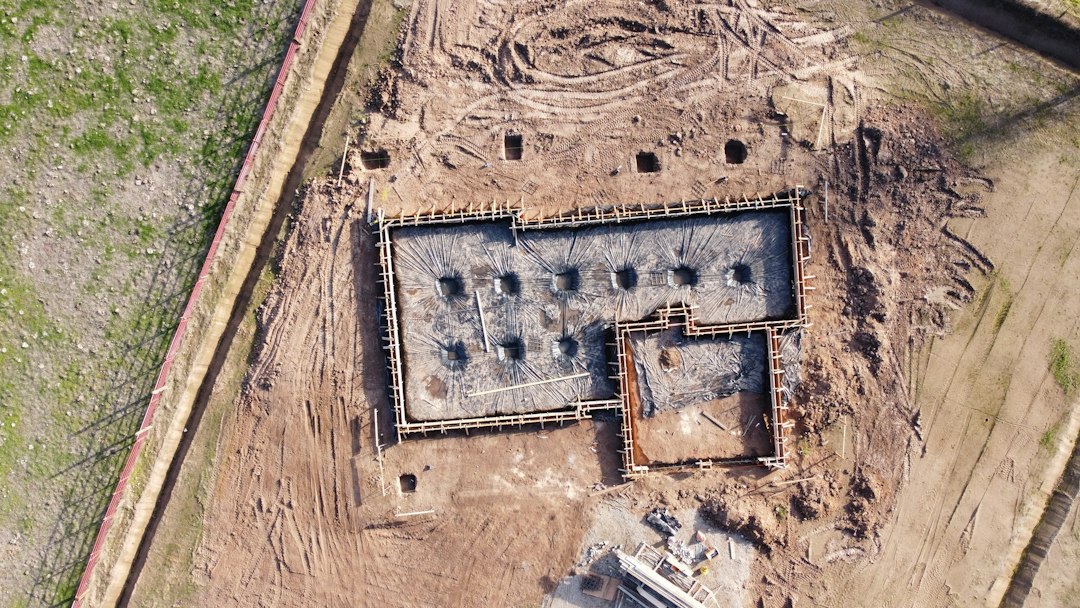
Selecting the wrong waterstop profile for a congested rebar cage wastes hours of carpentry on 18 mm shuttering plywood and invites honeycombing around the joint:
- Why Consultants Prefer Internal 200–250 mm PVC Waterstops for Water Tanks: In potable and fire-fighting underground water tanks holding 2.5 m to 4.0 m of continuous water head from the inside, an internal centrally placed PVC waterstop resists both positive (internal) and negative (external groundwater) pressure equally. Always secure the outer brass or PVC eyelets to the wall rebar every 300 mm with hog rings and binding wire so the upper wing cannot fold over during vibration.
- Why Rearguard PVC Saves Time on Base Slabs: Installing a central PVC waterstop horizontally inside a 250 mm base slab day-joint forces carpenters to split the timber stop-end board in half around the waterstop web. An External Rearguard 250 mm PVC waterstop is simply unrolled flat onto the PCC blinding concrete before the bottom rebar mat goes down, allowing a single full-depth stop-end board on top.
- Why Hydrophilic Swellable Bars Win on Congested Kicker Retrofits: Because swellable bars (20×10 mm) are installed after the 150 mm concrete kicker has been cast and stripped—glued and nailed along the clean concrete centerline right before closing the wall shuttering—there is zero risk of a protruding PVC wing trapping coarse aggregate or folding during the base pour.
Worked UAE Quantity Calculation: 6 m × 4 m Underground RCC Water Tank
Before ordering C35/C40 watertight ready-mix via our Concrete Volume Calculator, work out your exact PVC waterstop roll count and hydrophilic pipe-sleeve rings for a typical villa underground water tank:
Worked Example: 6.0 m × 4.0 m × 2.8 m Deep Underground RCC Water Tank (200 mm Wall Thickness, Internal Partition Wall)
Tank Geometry: External plan perimeter = 2 × (6.0 m + 4.0 m) = 20.0 m. Plus one internal 4.0 m dividing wall separating the domestic and irrigation/fire compartments. Wall & base slab thickness = 200 mm. Construction sequence: Base slab + 150 mm high wall kicker cast in Pour 1; full 2.65 m wall height cast in Pour 2; top roof slab cast in Pour 3.
- 1. Bottom Horizontal Kicker Joint (200 mm Wide Internal Plain-Web PVC Waterstop):
• Perimeter kicker centerline (20.0 m) + internal partition wall kicker (4.0 m) = 24.0 linear metres net.
• Add 10% welding lap & corner mitre allowance = 26.4 m → Order 2 rolls of 200 mm × 15 m Internal Plain-Web PVC Waterstop (30 m total). - 2. Factory Intersection Pieces (Optional / Consultant Spec):
• 4 pcs of Flat L-Corners (90°) for the four tank corners + 2 pcs of Flat T-Pieces where the internal partition kicker meets the longitudinal walls. - 3. Top Wall-to-Roof Slab Construction Joint (20×10 mm Hydrophilic Swellable Waterstop Bar):
• To seal the top wall-to-roof-slab cold joint + 4 puddle-flange pipe penetrations (24.0 m + 2.0 m around pipe collars) = 26.0 m × 1.08 = 28.1 m → Order 1 carton (30 m / 6 coils × 5 m) of 20 mm × 10 mm Hydrophilic Swellable Waterstop Bar + 3 cartridges (310 ml) of Swellable Mastic Adhesive. - 4. Tie-Rod Cone Plugging (After Wall Shuttering Removal):
• 48 through-wall form tie holes plugged with non-shrink cementitious repair grout + swellable plugs.
Commercial Note: PVC waterstop pricing in the UAE is driven by web thickness (light 4 mm commercial vs heavy 6–10 mm consultant-grade ASTM D412 virgin PVC) and roll weight. Check your total waterproofing material invoice with our UAE 5% VAT Calculator.
5 Common Waterstop Mistakes on UAE Sites (And How to Avoid Them)
- Failing to Vibrate Concrete Thoroughly Under Horizontal PVC Wings (Air Pockets): When a 200 mm or 250 mm PVC waterstop sits horizontally or at a shallow angle in a base slab or kicker, rising air bubbles and bleed water get trapped under the lower PVC ribs, creating a continuous honeycomb tunnel right along the waterstop. Always lift the wing slightly while placing concrete and consolidate both sides with a 40–50 mm poker vibrator.
- Leaving Hydrophilic Swellable Bars Exposed to Rain or Curing Water Before Pouring: If you nail a 20×10 mm bentonite swellable bar onto a kicker on Thursday and flood-cure the slab or get hit by weekend rain before the wall shuttering is closed and poured, the bar pre-expands in open air. Once pre-swollen unconfined, it loses its expansive sealing pressure inside the concrete and must be stripped off and replaced.
- Installing Swellable Bars in Thin Walls With Less Than 75 mm Concrete Cover: Hydrophilic waterstops exert significant expansion force as they absorb water. Installing a 20×15 mm swellable strip near the edge of a thin 120 mm concrete upstand with only 40 mm cover will split the concrete straight along the joint line. Maintain at least 75 mm to 80 mm of reinforced concrete cover on both faces.
- Letting the Centre Bulb Get Buried Off-Centre in an Expansion Joint: In an expansion joint, the hollow centre bulb of a PVC waterstop must align directly inside the 20 mm compressible joint gap (between the expansion joint filler boards). If the centre bulb is cast solid inside one concrete bay, the flat web has to take 100% of the shear movement and can tear under ASTM D624 shear loads.
- Driving Nails Through the Web of a PVC Waterstop to Hold It Upright: Carpenters often hammer 3-inch steel nails straight through the middle web of a PVC waterstop into the timber shuttering to stop it flopping over. Every nail hole inside the web is a direct leak path. Only attach tie wires through the pre-punched outer brass eyelets or outermost edge flange designed for rebar tying.
Frequently Asked Questions (FAQs)
Which width of PVC waterstop should I use for a 200 mm or 250 mm concrete wall?
As a standard UAE structural rule, the PVC waterstop width should be approximately equal to (or up to 50 mm narrower than) the concrete section thickness, providing at least 75 mm to 125 mm of embedment into each pour. Use a 200 mm wide PVC waterstop for 200 mm thick villa water tank walls, and a 250 mm wide PVC waterstop for 250 mm to 300 mm thick basement walls and raft slabs.
Can I use a hydrophilic swellable waterstop bar in a concrete expansion joint?
No. Hydrophilic swellable waterstop bars (bentonite or acrylic) are designed strictly for non-moving construction joints (cold joints and kickers) where they are completely confined by concrete on all sides. In an open expansion joint, a swellable bar will extrude into the joint gap and cannot bridge cyclic thermal opening and closing; always use a Centre-Bulb PVC waterstop plus elastomeric joint sealant for expansion joints.
How do you join two rolls of PVC waterstop together on a UAE construction site?
PVC waterstop rolls must be joined by thermal heat welding. Cut both ends square with a sharp knife, clamp them against a thermostatically controlled electric waterstop welding blade heated to 190°C–210°C until a 2–3 mm molten bead forms along the full profile, slide the blade out, and press the two molten ends firmly together for 60 seconds until cooled. Never glue, nail, or wire-tie un-welded laps.
How are hydrophilic swellable waterstop strips fixed to a concrete kicker?
Wire-brush the cured concrete kicker clean of laitance and dust, extrude a continuous bead of hydrophilic swellable adhesive mastic along the centerline between the inner and outer rebar layers, press the 20×10 mm or 20×15 mm swellable bar firmly into the adhesive, and secure it with masonry washer nails every 250–300 mm. Butt-join coil ends tightly (or lap side-by-side by 50 mm) without gaps.
Order PVC Waterstop Rolls, Swellable Bars & Tank Waterproofing in the UAE
Al Tashteb Al Saree Building Materials Trading (Bu Tina, Sharjah) supplies civil contractors across Sharjah, Ajman, and Dubai with 150 mm, 200 mm, and 250 mm PVC waterstop rolls, hydrophilic swellable bars, cementitious & bituminous waterproofing chemicals, PU joint sealants & swellable mastics, and Terraco Weathercoat GP & concrete repair mortars—all billed in AED incl. 5% VAT.